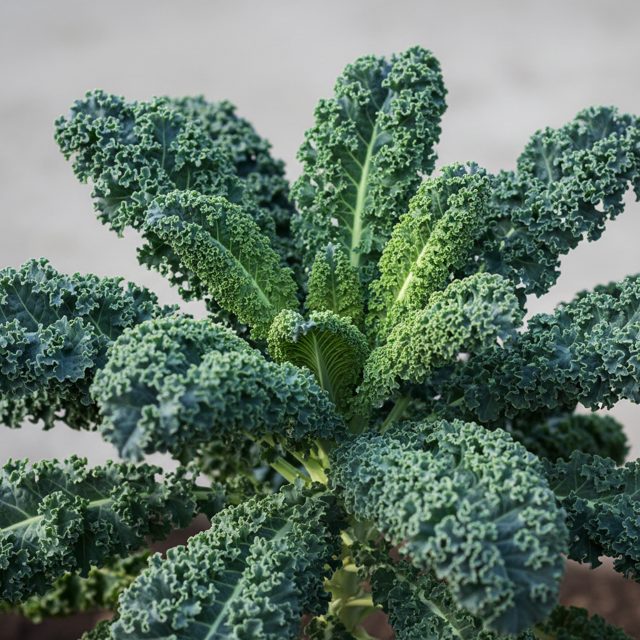
- Scientific name
- Brassica oleracea var. sabellica
- Family
- Brassicaceae
- Also known as
- Leaf Cabbage
- Category
- Vegetables, Fruits & Herbs
- Care difficulty
- Easy
- Pet safety
- Non-toxic to cats and dogs
How to care for kale
- Light: Requires at least 6 hours of full sun daily for best growth and flavor. It can tolerate partial shade, which may extend the harvest in hot climates.
- Water: Keep soil consistently moist, especially during dry periods, to ensure tender leaves. Avoid allowing the soil to dry out completely.
- Soil: Prefers rich, well-draining soil with a pH between 6.0 and 7.5. Incorporate plenty of organic matter before planting.
- Temperature: Thrives in cool weather, ideally between 60-70°F (15-21°C). It can tolerate light frosts, which often improve its flavor.
- Humidity: Average humidity is generally sufficient. Ensure good air circulation to prevent fungal issues.
- Fertilizer: Benefits from nitrogen-rich fertilizer to support lush leaf growth. Apply a balanced liquid feed every 3-4 weeks or top-dress with compost.
- Propagation: Easily grown from seed, either direct-sown in the garden or started indoors 4-6 weeks before the last frost. Plant seeds 1/2 inch deep.
Is kale toxic to pets?
Pet-safe. Generally considered non-toxic to cats, dogs, and humans in moderate amounts. High oxalate content may be a concern for pets with kidney issues if consumed in very large quantities regularly. See our guide to toxic plants for cats and dogs.
Common problems
- Aphids: Spray with a strong stream of water or apply insecticidal soap to the undersides of leaves.
- Cabbage worms: Handpick caterpillars, use row covers to prevent moths, or apply Bacillus thuringiensis (Bt) spray.
Did you know?
Kale is one of the most nutrient-dense foods on the planet, packed with vitamins A, K, C, and various minerals.
Let PlantBetter help
Snap a photo with PlantBetter to confirm your plant is a kale, spot problems early and get care reminders tailored to your home.