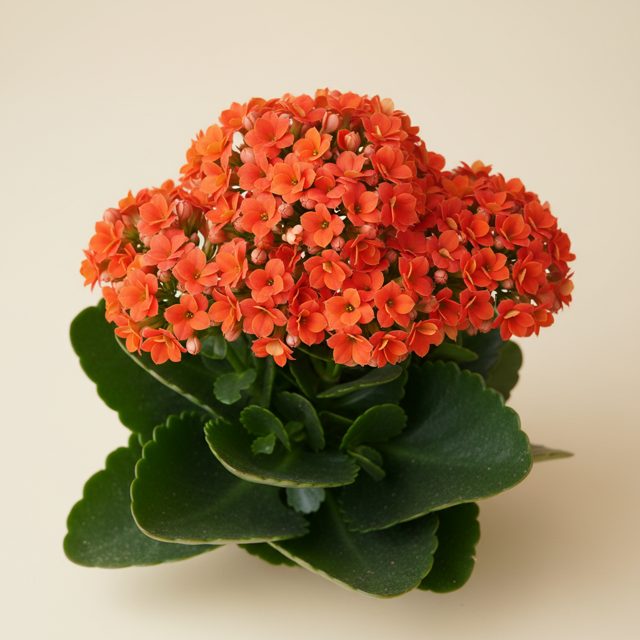
- Scientific name
- Kalanchoe blossfeldiana
- Family
- Crassulaceae
- Also known as
- Florist Kalanchoe, Christmas Kalanchoe
- Category
- Succulents & Cacti
- Care difficulty
- Easy
- Pet safety
- Toxic to pets
How to care for kalanchoe
- Light: Prefers bright, indirect light for best flowering. Can tolerate some direct morning sun, but avoid harsh afternoon sun.
- Water: Allow the soil to dry out completely between waterings. Overwatering is the most common cause of problems.
- Soil: Needs well-draining soil, such as a succulent or cactus mix. Ensure pots have drainage holes.
- Temperature: Thrives in average room temperatures between 60-80°F (15-27°C). Protect from cold drafts and temperatures below 50°F (10°C).
- Humidity: Tolerates average household humidity. Does not require high humidity levels.
- Fertilizer: Feed with a balanced liquid fertilizer every 2-4 weeks during the blooming period. Reduce or stop once flowering has finished.
- Propagation: Easily propagated from stem cuttings. Allow cuttings to callus for a day or two before planting in moist, well-draining soil.
Is kalanchoe toxic to pets?
Not pet-safe. Toxic to cats and dogs, potentially causing vomiting, diarrhea, lethargy, and in rare cases, cardiac arrhythmia. See our guide to toxic plants for cats and dogs.
Common problems
- Root rot: Ensure well-draining soil and water only when the soil is completely dry to the touch.
- Lack of blooms: Provide sufficient bright, indirect light and ensure it receives a period of short days/long nights for reblooming.
Did you know?
To rebloom Kalanchoe, it needs a period of short days and long nights (14 hours of darkness) for several weeks, similar to Poinsettias.
Let PlantBetter help
Snap a photo with PlantBetter to confirm your plant is a kalanchoe, spot problems early and get care reminders tailored to your home.