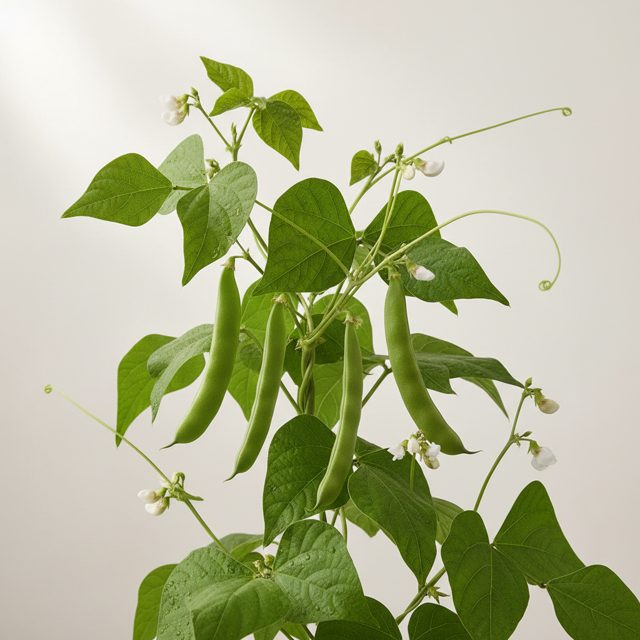
- Scientific name
- Phaseolus vulgaris
- Family
- Fabaceae
- Also known as
- Snap bean, String bean, French bean
- Category
- Vegetables, Fruits & Herbs
- Care difficulty
- Easy
- Pet safety
- Non-toxic to cats and dogs
How to care for green bean
- Light: Requires full sun, at least 6-8 hours of direct sunlight daily, for optimal growth and pod production. Too little light can result in sparse yields.
- Water: Keep soil consistently moist, especially during flowering and pod development. Aim for about 1 inch of water per week.
- Soil: Prefers well-draining, fertile soil with a pH between 6.0 and 7.0. Avoid heavy clay soils.
- Temperature: Warm-season crop that thrives in temperatures between 65-80°F (18-27°C). Frost will kill the plants.
- Humidity: Normal outdoor humidity levels are generally fine. High humidity can sometimes increase the risk of fungal diseases if air circulation is poor.
- Fertilizer: Beans are nitrogen-fixers, so avoid excessive nitrogen fertilizer which can promote foliage over pods. Amend soil with compost before planting.
- Propagation: Propagate by planting seeds directly into the garden after the last frost. Ensure soil is warm enough for germination.
Is green bean toxic to pets?
Pet-safe. Green beans are generally safe for cats, dogs, and people. See our guide to toxic plants for cats and dogs.
Common problems
- Powdery mildew: Plant resistant varieties, ensure good air circulation, and apply organic fungicides or neem oil if infection occurs.
- Aphids: Spray with a strong stream of water to dislodge them, use insecticidal soap, or introduce beneficial insects like ladybugs.
Did you know?
Green beans are available in 'bush' varieties (compact plants) and 'pole' varieties (vining plants that need support).
Let PlantBetter help
Snap a photo with PlantBetter to confirm your plant is a green bean, spot problems early and get care reminders tailored to your home.