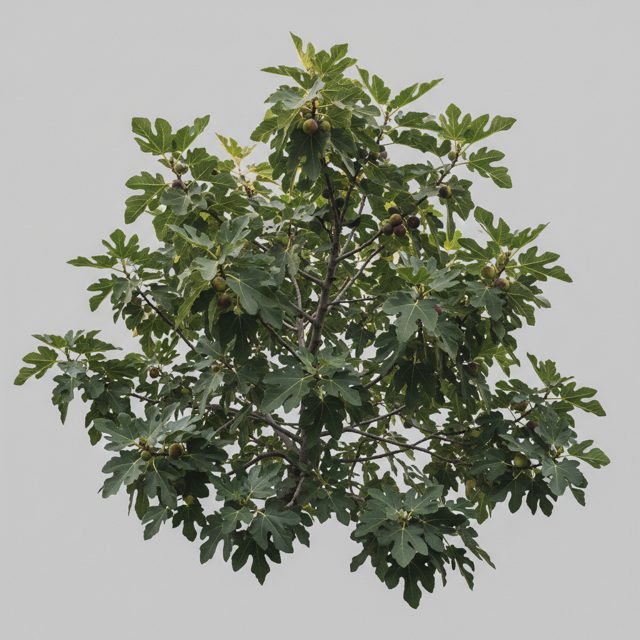
- Scientific name
- Ficus carica
- Family
- Moraceae
- Also known as
- Common Fig
- Category
- Vegetables, Fruits & Herbs
- Care difficulty
- Easy
- Pet safety
- Toxic to pets
How to care for fig tree
- Light: Fig trees require full sun, meaning at least 8 hours of direct sunlight per day, for best fruit production.
- Water: Water deeply and regularly, especially during dry spells and when fruits are developing; allow soil to dry slightly between waterings.
- Soil: They prefer well-draining, rich soil with a neutral to slightly alkaline pH (6.0-7.0).
- Temperature: Figs thrive in warm climates and need protection from severe frost, though many varieties are cold-hardy.
- Humidity: Moderate humidity is generally suitable for fig trees.
- Fertilizer: Fertilize with a balanced all-purpose fertilizer in spring as new growth begins, and once more in mid-summer.
- Propagation: Fig trees are easily propagated from dormant hardwood cuttings taken in late winter or early spring.
Is fig tree toxic to pets?
Not pet-safe. The milky sap produced by fig trees contains ficin and psoralen, which can cause skin irritation, oral irritation, and gastrointestinal upset in pets and humans. See our guide to toxic plants for cats and dogs.
Common problems
- Lack of fruit production: Ensure adequate sunlight, mature plant age, and sufficient water; some varieties need specific pollination.
- Fig rust (fungal disease): Remove infected leaves, improve air circulation, and apply a copper-based fungicide if severe.
Did you know?
Figs are technically not fruits, but inverted flowers called 'syconia,' with the actual tiny flowers and seeds inside.
Let PlantBetter help
Snap a photo with PlantBetter to confirm your plant is a fig tree, spot problems early and get care reminders tailored to your home.