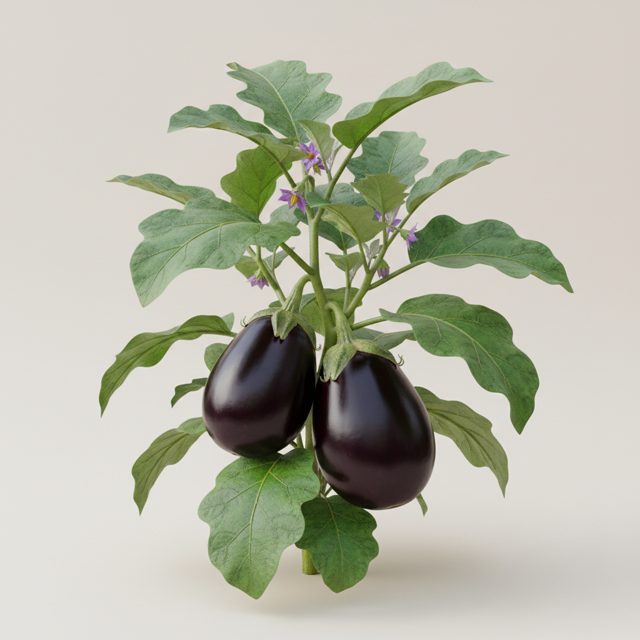
- Scientific name
- Solanum melongena
- Family
- Solanaceae
- Also known as
- Aubergine, Brinjal
- Category
- Vegetables, Fruits & Herbs
- Care difficulty
- Moderate
- Pet safety
- Toxic to pets
How to care for eggplant
- Light: Requires full sun, at least 6-8 hours of direct sunlight per day, for optimal fruit production. Insufficient light leads to poor yields.
- Water: Keep soil consistently moist, especially during flowering and fruiting. Water deeply and regularly, aiming for 1 inch per week.
- Soil: Prefers well-draining, fertile soil rich in organic matter, with a pH between 6.0 and 6.8. Avoid heavy, compacted soils.
- Temperature: Warm-season crop, thrives in temperatures between 70-85°F (21-29°C). Plant after all danger of frost has passed and soil is warm.
- Humidity: Normal outdoor humidity levels are generally fine. Good air circulation is important to minimize disease risk in humid conditions.
- Fertilizer: Incorporate compost into the soil before planting. Fertilize with a balanced slow-release fertilizer or a liquid feed every few weeks once fruiting begins.
- Propagation: Propagate from seeds, starting indoors 6-8 weeks before the last frost. Transplant carefully after hardening off.
Is eggplant toxic to pets?
Not pet-safe. Eggplant contains solanine, especially in the leaves, stems, and unripe fruit. While cooked fruit is generally safe for people, it can cause mild gastrointestinal upset in some pets. See our guide to toxic plants for cats and dogs.
Common problems
- Flea beetles: Use row covers to protect young plants, apply diatomaceous earth, or spray with neem oil.
- Blossom end rot: Ensure consistent watering, improve soil drainage, and provide adequate calcium by amending soil with bone meal or gypsum if deficient.
Did you know?
Eggplants are botanically fruits, specifically berries, but are culinarily considered vegetables.
Let PlantBetter help
Snap a photo with PlantBetter to confirm your plant is a eggplant, spot problems early and get care reminders tailored to your home.