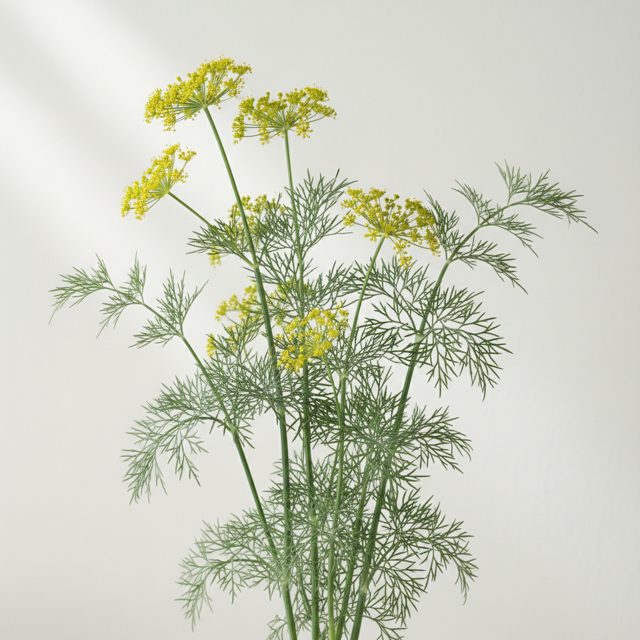
- Scientific name
- Anethum graveolens
- Family
- Apiaceae
- Also known as
- Dill weed, Dill seed
- Category
- Vegetables, Fruits & Herbs
- Care difficulty
- Easy
- Pet safety
- Non-toxic to cats and dogs
How to care for dill
- Light: Requires full sun, at least 6 hours of direct sunlight per day, for best growth and flavor. Can tolerate light shade but may become leggy.
- Water: Keep soil consistently moist but not waterlogged, especially during germination and early growth. Water deeply when the top inch of soil is dry.
- Soil: Prefers well-draining, fertile soil with a neutral to slightly acidic pH (6.0-7.0). Avoid heavy, compacted soils.
- Temperature: Cool-season annual, thrives in moderate temperatures between 60-75°F (15-24°C). Can tolerate light frost but bolts in hot weather.
- Humidity: Normal outdoor humidity is suitable. Good air circulation helps prevent fungal issues.
- Fertilizer: Dill generally doesn't require heavy feeding. Amend soil with compost before planting. A light application of balanced fertilizer can be used if soil is poor.
- Propagation: Propagate by direct sowing seeds into the garden after the last frost. Dill does not transplant well.
Is dill toxic to pets?
Pet-safe. Dill is generally considered safe for cats, dogs, and people when consumed in moderation. See our guide to toxic plants for cats and dogs.
Common problems
- Bolting (premature flowering): Plant in early spring or late summer to avoid peak heat, choose slow-bolting varieties, and ensure consistent moisture.
- Aphids: Spray with a strong stream of water, use insecticidal soap, or introduce beneficial insects like ladybugs.
Did you know?
The word 'dill' comes from the Old Norse word 'dylla,' meaning 'to soothe,' referring to its traditional use as a digestive aid.
Let PlantBetter help
Snap a photo with PlantBetter to confirm your plant is a dill, spot problems early and get care reminders tailored to your home.