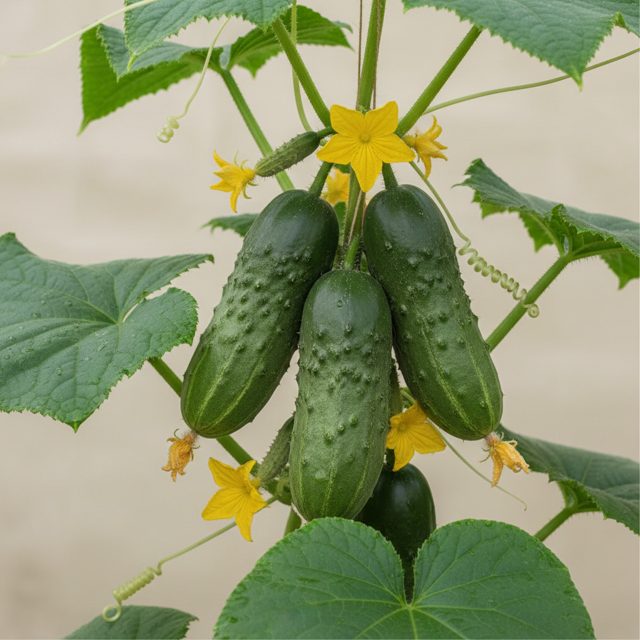
- Scientific name
- Cucumis sativus
- Family
- Cucurbitaceae
- Also known as
- Gherkin
- Category
- Vegetables, Fruits & Herbs
- Care difficulty
- Easy
- Pet safety
- Non-toxic to cats and dogs
How to care for cucumber
- Light: Cucumbers require full sun, meaning at least 6-8 hours of direct sunlight daily.
- Water: Maintain consistently moist soil, especially during flowering and fruiting, by watering deeply.
- Soil: Plant in rich, well-draining soil with plenty of organic matter, ideally with a pH between 6.0 and 7.0.
- Temperature: They prefer warm temperatures between 65-75°F (18-24°C) and are sensitive to frost.
- Humidity: Cucumbers prefer moderate to high humidity.
- Fertilizer: Fertilize with a balanced feed every 2-3 weeks, especially after fruits begin to set.
- Propagation: Cucumbers are typically grown from seeds, sown directly outdoors after the last frost or started indoors a few weeks prior.
Is cucumber toxic to pets?
Pet-safe. Cucumbers are generally considered non-toxic to cats, dogs, and humans. See our guide to toxic plants for cats and dogs.
Common problems
- Powdery mildew: Improve air circulation, water at the base of the plant, and treat with fungicides or neem oil.
- Yellowing leaves: This can indicate nutrient deficiency or inconsistent watering; ensure regular feeding and consistent moisture.
Did you know?
Cucumbers are 95% water, making them an excellent choice for hydration.
Let PlantBetter help
Snap a photo with PlantBetter to confirm your plant is a cucumber, spot problems early and get care reminders tailored to your home.