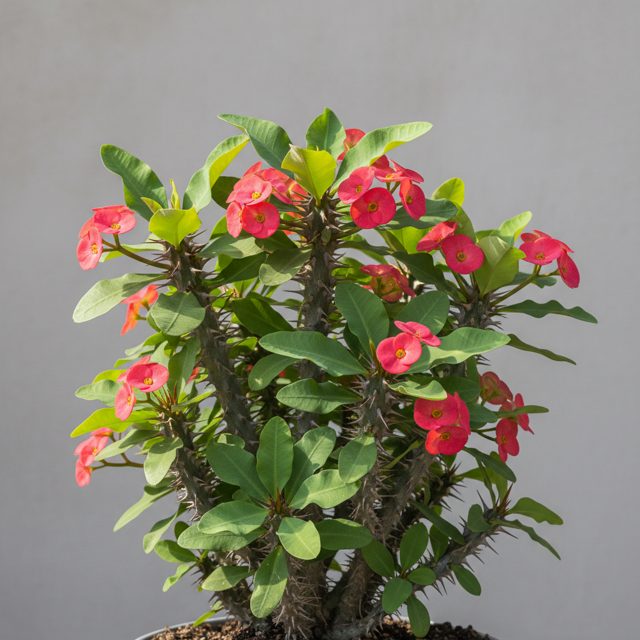
- Scientific name
- Euphorbia milii
- Family
- Euphorbiaceae
- Also known as
- Christ Plant, Christ Thorn
- Category
- Succulents & Cacti
- Care difficulty
- Easy
- Pet safety
- Toxic to pets
How to care for crown of thorns
- Light: Requires bright, direct sunlight for at least 3-4 hours daily to bloom profusely. Can tolerate some indirect light but flowering will be reduced.
- Water: Allow the top inch or two of soil to dry out between waterings. Water less frequently in winter.
- Soil: Needs well-draining soil, such as a cactus and succulent mix. Good drainage prevents root rot.
- Temperature: Prefers warm temperatures, ideally between 65-80°F (18-27°C). Protect from temperatures below 50°F (10°C).
- Humidity: Tolerates average to low household humidity. High humidity is not required.
- Fertilizer: Feed with a balanced liquid fertilizer every 2-4 weeks during the active growing season (spring through fall). Reduce or stop in winter.
- Propagation: Propagated from stem cuttings. Allow the cut end to callus for a few days to a week to stop sap flow before planting in moist, well-draining soil.
Is crown of thorns toxic to pets?
Not pet-safe. Toxic to cats, dogs, and people; the milky sap can cause skin irritation, and ingestion can lead to mouth and stomach irritation, vomiting, and diarrhea. See our guide to toxic plants for cats and dogs.
Common problems
- Lack of blooms: Ensure the plant receives ample bright, direct sunlight for several hours daily.
- Yellowing leaves/leaf drop: Often a sign of overwatering or underwatering; adjust watering schedule to let soil dry between waterings.
Did you know?
The plant's scientific name honors Baron Milius, a governor of Réunion, who introduced the species to France in 1821.
Let PlantBetter help
Snap a photo with PlantBetter to confirm your plant is a crown of thorns, spot problems early and get care reminders tailored to your home.