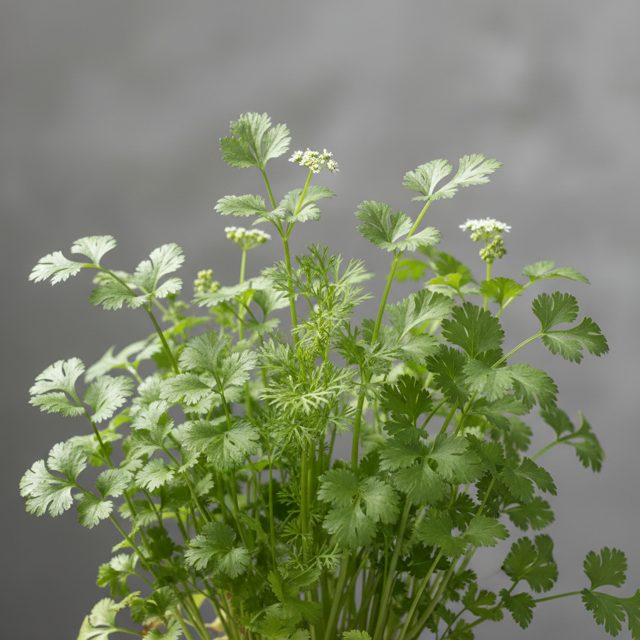
- Scientific name
- Coriandrum sativum
- Family
- Apiaceae
- Also known as
- Coriander, Chinese Parsley
- Category
- Vegetables, Fruits & Herbs
- Care difficulty
- Easy
- Pet safety
- Non-toxic to cats and dogs
How to care for cilantro
- Light: Prefers full sun (6+ hours) but benefits from some afternoon shade in hot climates to prevent bolting.
- Water: Keep soil consistently moist, especially during germination and early growth. Avoid letting the soil dry out completely.
- Soil: Requires well-draining, fertile soil with a pH between 6.2 and 6.8. Amend with organic matter for best results.
- Temperature: Grows best in cool temperatures, ideally between 50-75°F (10-24°C). Hot weather causes it to bolt quickly.
- Humidity: Average humidity is fine. Ensure good air circulation to prevent fungal diseases.
- Fertilizer: Generally doesn't require heavy feeding; a light application of balanced liquid fertilizer or compost tea every 3-4 weeks is sufficient.
- Propagation: Easily grown from seed directly sown outdoors after the last frost or indoors for transplanting. Plant seeds shallowly.
Is cilantro toxic to pets?
Pet-safe. Considered non-toxic to cats, dogs, and humans. It is widely consumed and safe. See our guide to toxic plants for cats and dogs.
Common problems
- Bolting (going to seed): Plant in cooler weather or provide afternoon shade; harvest regularly to delay bolting.
- Aphids: Blast off with a strong stream of water or apply neem oil according to product instructions.
Did you know?
The seeds of the cilantro plant are known as coriander, which have a completely different flavor profile and are used as a spice.
Let PlantBetter help
Snap a photo with PlantBetter to confirm your plant is a cilantro, spot problems early and get care reminders tailored to your home.