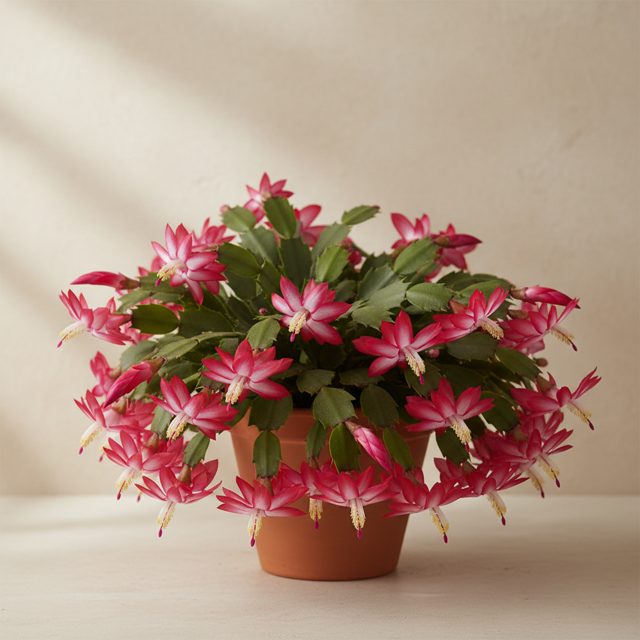
- Scientific name
- Schlumbergera bridgesii
- Family
- Cactaceae
- Also known as
- Holiday Cactus, Thanksgiving Cactus, Easter Cactus
- Category
- Succulents & Cacti
- Care difficulty
- Easy
- Pet safety
- Non-toxic to cats and dogs
How to care for christmas cactus
- Light: Prefers bright, indirect light. Direct sun can scorch leaves, but insufficient light will prevent flowering.
- Water: Water when the top inch of soil feels dry. Allow water to drain completely and do not let it sit in standing water.
- Soil: Requires a well-draining, slightly acidic potting mix, such as a mix designed for cacti or an orchid mix with some peat.
- Temperature: Thrives in temperatures between 60-75°F (15-24°C). To encourage blooming, a period of cooler temperatures (50-55°F / 10-13°C) and shortened daylight is beneficial.
- Humidity: Prefers moderate to high humidity; mist occasionally or place on a pebble tray.
- Fertilizer: Fertilize monthly during spring and summer with a balanced liquid fertilizer. Stop fertilizing in fall to prepare for blooming.
- Propagation: Easily propagated from stem segments; simply twist off a few segments, let them callus for a day, and then plant in moist soil.
Is christmas cactus toxic to pets?
Pet-safe. Non-toxic to cats, dogs, and humans. See our guide to toxic plants for cats and dogs.
Common problems
- No blooms or bud drop: Caused by insufficient light, lack of a cool/dark period, or sudden environmental changes; ensure proper light/temperature cycles.
- Reddish leaves: Often a sign of too much direct sunlight or nutrient deficiency; move to a shadier spot or fertilize.
Did you know?
Despite its common name, the Christmas Cactus is native to the coastal mountains of Brazil, where it grows as an epiphyte on trees or rocks.
Let PlantBetter help
Snap a photo with PlantBetter to confirm your plant is a christmas cactus, spot problems early and get care reminders tailored to your home.