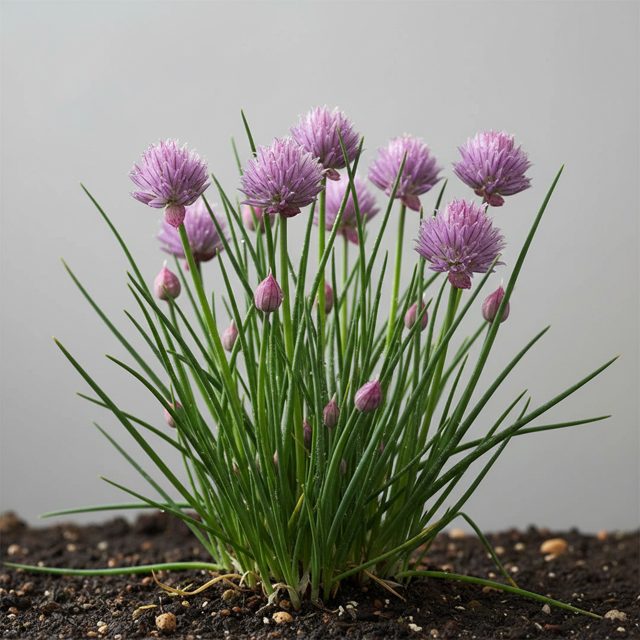
- Scientific name
- Allium schoenoprasum
- Family
- Amaryllidaceae
- Also known as
- Onion Chives, Garlic Chives
- Category
- Vegetables, Fruits & Herbs
- Care difficulty
- Easy
- Pet safety
- Toxic to pets
How to care for chives
- Light: Prefers full sun (at least 6 hours) for vigorous growth and best flavor. Can tolerate partial shade, though growth may be less robust.
- Water: Keep soil consistently moist, especially during dry spells. Avoid letting the soil dry out completely.
- Soil: Thrives in fertile, well-draining soil with a pH between 6.0 and 7.0. Amend with organic matter for best results.
- Temperature: Grows best in cool to moderate temperatures, ideally 60-70°F (15-21°C). They are very cold hardy and can survive winter.
- Humidity: Average household humidity is suitable. Good air circulation prevents fungal diseases.
- Fertilizer: Benefit from a balanced liquid fertilizer every 2-4 weeks during the growing season. A spring application of compost is also helpful.
- Propagation: Easily propagated by dividing established clumps in spring or fall. Can also be grown from seed, but germination is slow.
Is chives toxic to pets?
Not pet-safe. Toxic to cats and dogs, causing gastrointestinal upset, red blood cell damage, and potentially anemia if ingested. See our guide to toxic plants for cats and dogs.
Common problems
- Yellowing tips: Often a sign of too little water or nutrient deficiency; ensure consistent moisture and consider light fertilization.
- Aphids: Rinse off with a strong stream of water or apply insecticidal soap as needed.
Did you know?
Chives are the smallest species of the edible onions, but are still packed with flavor and nutrients.
Let PlantBetter help
Snap a photo with PlantBetter to confirm your plant is a chives, spot problems early and get care reminders tailored to your home.