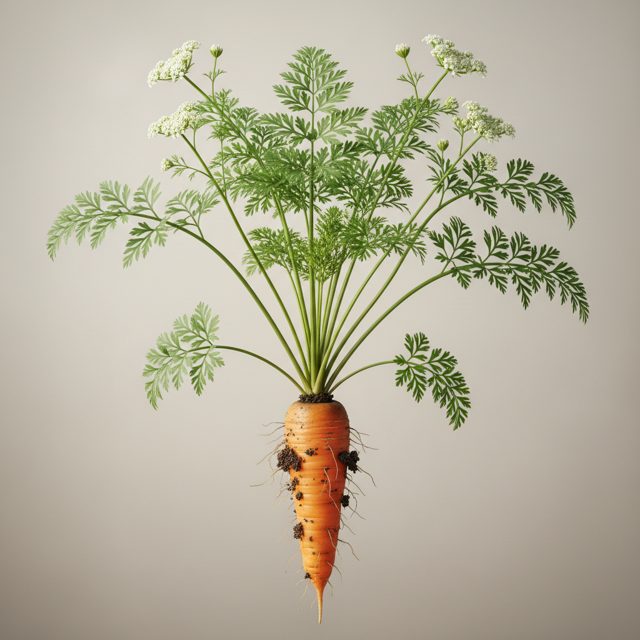
- Scientific name
- Daucus carota subsp. sativus
- Family
- Apiaceae
- Also known as
- Garden Carrot
- Category
- Vegetables, Fruits & Herbs
- Care difficulty
- Moderate
- Pet safety
- Non-toxic to cats and dogs
How to care for carrot
- Light: Requires full sun (at least 6 hours) for optimal root development. Too much shade can result in small roots.
- Water: Keep soil consistently moist, especially during germination and root development. Inconsistent watering can lead to splitting or poor shape.
- Soil: Prefers loose, well-draining, stone-free soil with a pH between 6.0 and 6.8. Avoid compacted or heavy clay soils.
- Temperature: Grows best in cool to moderate temperatures, ideally between 60-70°F (15-21°C). High temperatures can cause roots to become bitter.
- Humidity: Average humidity is sufficient. Good air circulation is beneficial for foliage health.
- Fertilizer: Avoid high-nitrogen fertilizers which encourage leafy growth over root development. A balanced, slow-release fertilizer or compost is usually enough.
- Propagation: Grown exclusively from seed, direct-sown into the garden. Seeds are tiny and require fine soil and consistent moisture for germination.
Is carrot toxic to pets?
Pet-safe. Non-toxic to cats, dogs, and humans. It is a healthy and safe snack or vegetable. See our guide to toxic plants for cats and dogs.
Common problems
- Forked or stunted roots: Ensure soil is loose and free of obstructions; avoid fresh manure as it can cause deformities.
- Aphids: Spray with a strong stream of water or apply insecticidal soap to control infestations.
Did you know?
While commonly orange today, carrots were originally purple or yellow. The orange carrot was developed in the Netherlands in the 17th century.
Let PlantBetter help
Snap a photo with PlantBetter to confirm your plant is a carrot, spot problems early and get care reminders tailored to your home.