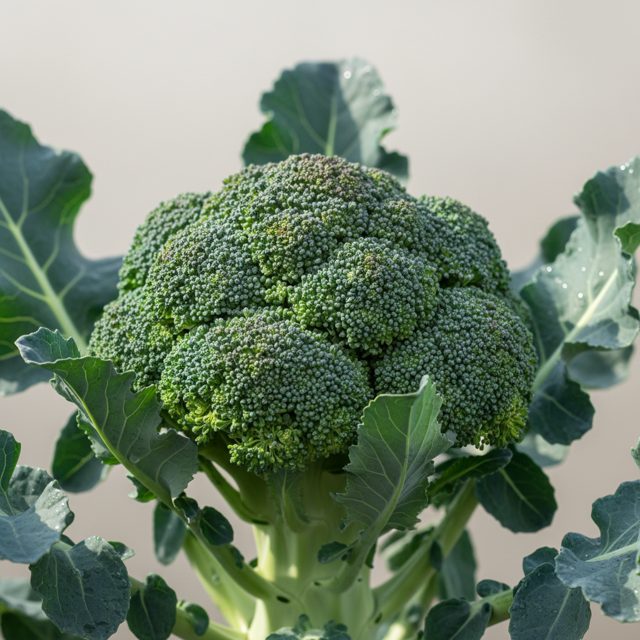
- Scientific name
- Brassica oleracea var. italica
- Family
- Brassicaceae
- Also known as
- Calabrese
- Category
- Vegetables, Fruits & Herbs
- Care difficulty
- Moderate
- Pet safety
- Non-toxic to cats and dogs
How to care for broccoli
- Light: Requires full sun, at least 6-8 hours of direct sunlight per day, for vigorous growth and large heads. Can tolerate some partial shade.
- Water: Keep soil consistently moist, especially during head formation. Provide 1-1.5 inches of water per week, ensuring deep watering.
- Soil: Prefers rich, well-draining soil with a pH between 6.0 and 7.0. Amend with plenty of organic matter like compost.
- Temperature: Cool-season crop that thrives in temperatures between 60-75°F (15-24°C). Hot weather can cause bolting.
- Humidity: Normal outdoor humidity is suitable. Good air circulation is important to prevent fungal diseases, especially in humid conditions.
- Fertilizer: Incorporate compost before planting. Fertilize with a balanced or nitrogen-rich fertilizer when plants are 6-8 inches tall, and again when heads begin to form.
- Propagation: Propagate from seeds, either by starting indoors 4-6 weeks before the last frost or direct sowing in cool climates. Transplant carefully.
Is broccoli toxic to pets?
Pet-safe. Broccoli is generally safe for cats, dogs, and people when consumed in moderation. See our guide to toxic plants for cats and dogs.
Common problems
- Bolting (premature flowering): Plant at the right time for your climate, use heat-tolerant varieties if needed, and ensure consistent moisture to reduce stress.
- Cabbage worms: Cover plants with row covers from planting, hand-pick caterpillars, or use Bacillus thuringiensis (Bt) spray.
Did you know?
Broccoli gets its name from the Italian word 'broccolo', which means 'the flowering top of a cabbage'.
Let PlantBetter help
Snap a photo with PlantBetter to confirm your plant is a broccoli, spot problems early and get care reminders tailored to your home.