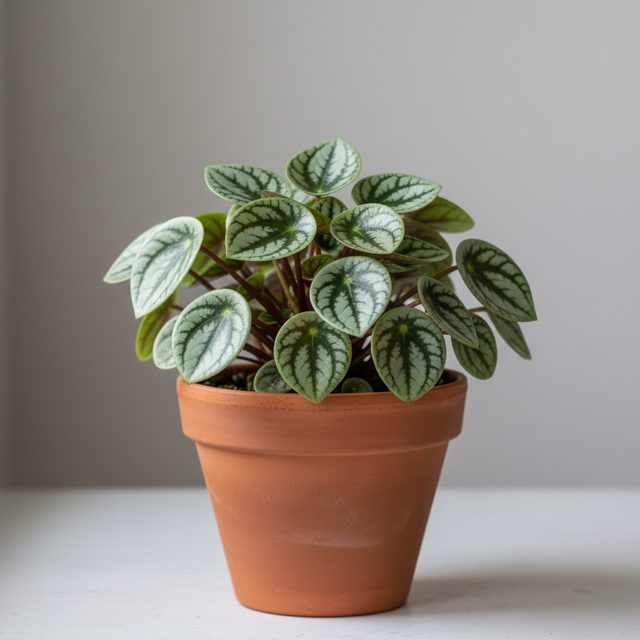
- Scientific name
- Peperomia argyreia
- Family
- Piperaceae
- Also known as
- Watermelon Plant, Peperomia 'Watermelon'
- Category
- Houseplants
- Care difficulty
- Easy
- Pet safety
- Non-toxic to cats and dogs
How to care for watermelon peperomia
- Light: Prefers bright, indirect light; too much direct sun can scorch leaves, while too little light will dull the variegation. An east-facing window is ideal.
- Water: Water thoroughly when the top 1-2 inches of soil are dry. Allow the soil to dry out between waterings to prevent root rot, as it stores water in its leaves.
- Soil: Needs a well-draining, airy potting mix. A standard houseplant mix amended with perlite, orchid bark, or sand will provide good drainage.
- Temperature: Thrives in average room temperatures, ideally between 65-75°F (18-24°C). Protect from cold drafts and temperatures below 55°F (13°C).
- Humidity: Enjoys moderate to high humidity but tolerates average household levels. If humidity is very low, occasional misting or a pebble tray can help.
- Fertilizer: Feed monthly during spring and summer with a balanced liquid fertilizer diluted to half strength. Reduce or stop fertilizing in fall and winter.
- Propagation: Easily propagated from leaf or stem cuttings. Place a leaf stem in moist soil or water, ensuring part of the petiole is buried.
Is watermelon peperomia toxic to pets?
Pet-safe. Non-toxic to cats, dogs, and humans. See our guide to toxic plants for cats and dogs.
Common problems
- Brown crispy leaf edges: Often caused by dry air or underwatering. Increase humidity around the plant or ensure consistent watering when the soil dries out.
- Mushy stems or black spots on leaves: A clear sign of overwatering and potential root rot. Reduce watering frequency, ensure good drainage, and consider repotting if severe.
Did you know?
The distinctive pattern on its leaves isn't just for show; the lighter stripes are caused by reflective cells that help maximize light absorption in its natural habitat.
Let PlantBetter help
Snap a photo with PlantBetter to confirm your plant is a watermelon peperomia, spot problems early and get care reminders tailored to your home.