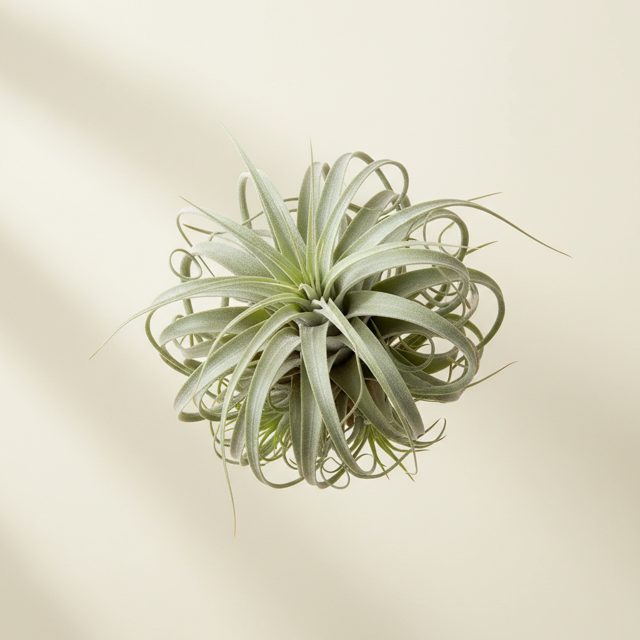
- Scientific name
- Tillandsia spp.
- Family
- Bromeliaceae
- Also known as
- Tillandsia, Epiphytic Bromeliad
- Category
- Houseplants
- Care difficulty
- Easy
- Pet safety
- Non-toxic to cats and dogs
How to care for air plant
- Light: Prefers bright, indirect light. Some varieties can tolerate a few hours of direct morning sun, but avoid harsh afternoon sun. Good air circulation is vital.
- Water: Soak plants in room-temperature, filtered water for 20-30 minutes once a week. Between soaks, mist 2-3 times a week, ensuring plants dry within 4 hours to prevent rot.
- Soil: Requires no soil, as it's an epiphytic plant that absorbs nutrients and water from the air and rain. Display on non-porous surfaces like wood or stone.
- Temperature: Thrives in average room temperatures between 60-80°F (16-27°C). Protect from extreme cold or heat.
- Humidity: Enjoys moderate to high humidity. Regular watering, whether by soaking or misting, is key to maintaining hydration.
- Fertilizer: Use a specialized tillandsia fertilizer (urea-free) diluted to quarter strength, once a month. Alternatively, use a very dilute balanced houseplant fertilizer (urea-free) for one soak a month.
- Propagation: Propagates by producing 'pups' or offsets, which can be gently removed when they are about one-third the size of the mother plant. They can also grow from seed, though this is rare for home growers.
Is air plant toxic to pets?
Pet-safe. Non-toxic to cats, dogs, and humans, making them a safe and interesting plant for households with pets. See our guide to toxic plants for cats and dogs.
Common problems
- Dry, crispy, or curling leaves: Indicates underwatering. Increase soaking frequency or duration, ensuring the plant is fully hydrated.
- Mushy base or rotting leaves: Caused by overwatering or insufficient drying time after watering. Ensure good air circulation and allow the plant to dry completely after soaking/misting.
Did you know?
Air plants have specialized cells called trichomes on their leaves that allow them to absorb water and nutrients directly from the air, eliminating the need for soil.
Let PlantBetter help
Snap a photo with PlantBetter to confirm your plant is a air plant, spot problems early and get care reminders tailored to your home.