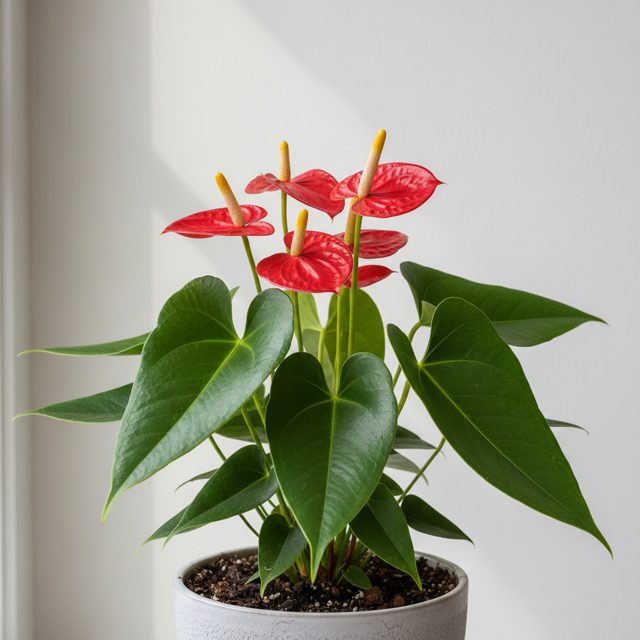
- Scientific name
- Anthurium andraeanum
- Family
- Araceae
- Also known as
- Flamingo Flower, Laceleaf, Tailflower
- Category
- Houseplants
- Care difficulty
- Moderate
- Pet safety
- Toxic to pets
How to care for anthurium
- Light: Requires bright, indirect light to encourage blooming. Too much direct sun can scorch leaves, while too little light will reduce flower production.
- Water: Water thoroughly when the top 1-2 inches of soil are dry. Allow the soil to dry slightly between waterings, but do not let it dry out completely.
- Soil: Needs a well-draining, airy potting mix rich in organic matter. An orchid mix or a blend with perlite and bark is ideal.
- Temperature: Thrives in warm temperatures between 65-80°F (18-27°C). Avoid cold drafts and temperatures below 60°F (15°C).
- Humidity: Prefers high humidity (above 60%) to mimic its tropical habitat. Regular misting, a pebble tray, or a humidifier is highly beneficial.
- Fertilizer: Feed every 4-6 weeks during spring and summer with a balanced liquid fertilizer diluted to half strength. Reduce or stop fertilizing in fall and winter.
- Propagation: Propagated by division during repotting, separating offshoots with roots. Stem cuttings can also be rooted in moist soil or water.
Is anthurium toxic to pets?
Not pet-safe. Toxic to cats, dogs, and humans, causing oral irritation, pain, swelling, and difficulty swallowing due to calcium oxalate crystals. See our guide to toxic plants for cats and dogs.
Common problems
- Brown tips or edges on leaves: Often a sign of low humidity, underwatering, or too much direct sunlight. Increase humidity, adjust watering, or move to a shadier spot.
- Lack of blooms or small, discolored flowers: Usually due to insufficient light or lack of nutrients. Ensure bright, indirect light and regular fertilization during the growing season.
Did you know?
The colorful, heart-shaped 'flower' of the Anthurium is actually a modified leaf called a spathe, which surrounds the true flower spike called a spadix.
Let PlantBetter help
Snap a photo with PlantBetter to confirm your plant is a anthurium, spot problems early and get care reminders tailored to your home.