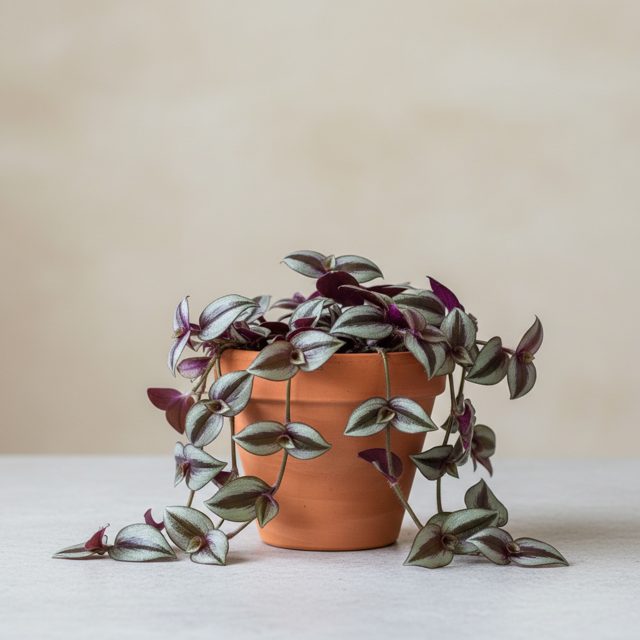
- Scientific name
- Tradescantia zebrina
- Family
- Commelinaceae
- Also known as
- Inch Plant, Spiderwort, Purple Heart
- Category
- Houseplants
- Care difficulty
- Easy
- Pet safety
- Toxic to pets
How to care for wandering dude
- Light: Prefers bright, indirect light for the best color; too much direct sun can scorch the leaves. Lower light levels will reduce variegation and make it appear greener.
- Water: Water thoroughly when the top inch or two of soil feels dry. Allow the topsoil to dry out between waterings to prevent root rot.
- Soil: Thrives in a well-draining, general-purpose potting mix. Good aeration is important to prevent waterlogging.
- Temperature: Prefers average room temperatures between 60-80°F (16-27°C). It can tolerate cooler temperatures but prefers warmth.
- Humidity: Tolerates average household humidity well but appreciates higher humidity. Occasional misting can be beneficial.
- Fertilizer: Feed monthly during the growing season (spring and summer) with a balanced liquid fertilizer diluted to half strength. Reduce feeding in fall and winter.
- Propagation: Extremely easy to propagate from stem cuttings. Simply snip off a piece of stem with a few leaves and place it in water or moist soil; roots will form quickly.
Is wandering dude toxic to pets?
Not pet-safe. Mildly toxic to cats and dogs, causing skin irritation or mild gastrointestinal upset if ingested. See our guide to toxic plants for cats and dogs.
Common problems
- Leggy growth/sparse foliage: Usually due to insufficient light; move to a brighter spot. Pinching back or pruning regularly encourages bushier growth.
- Fading variegation/color: Lack of adequate light is the primary cause; ensure it receives bright, indirect light to maintain its vibrant hues.
Did you know?
Its common name refers to its rapid, rambling growth, as if it's 'wandering' around.
Let PlantBetter help
Snap a photo with PlantBetter to confirm your plant is a wandering dude, spot problems early and get care reminders tailored to your home.