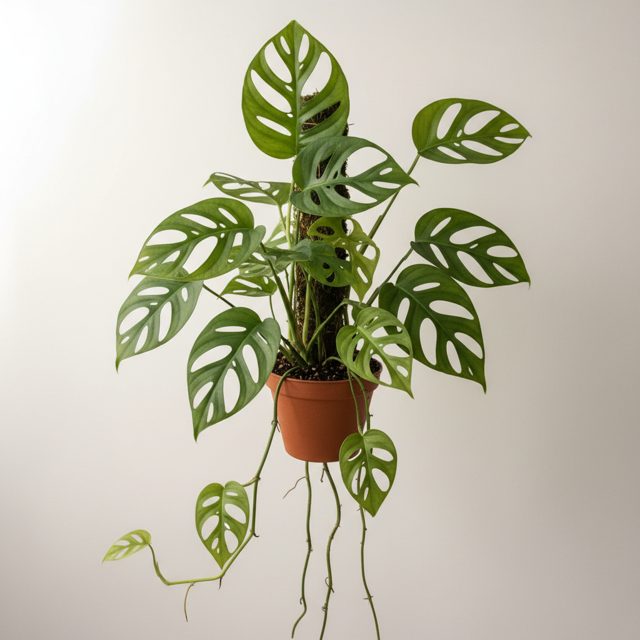
- Scientific name
- Monstera adansonii
- Family
- Araceae
- Also known as
- Adanson's Monstera, Five-hole Plant
- Category
- Houseplants
- Care difficulty
- Easy
- Pet safety
- Toxic to pets
How to care for swiss cheese vine
- Light: Prefers bright, indirect light; direct sun can scorch its leaves. Tolerates medium light but may grow slower and have fewer fenestrations.
- Water: Water when the top inch or two of soil feels dry. Ensure good drainage and avoid letting it sit in standing water.
- Soil: Requires a well-draining, aerated potting mix. A blend with perlite, orchid bark, and peat moss works well.
- Temperature: Thrives in average room temperatures between 65-80°F (18-27°C). Avoid temperatures below 55°F (13°C).
- Humidity: Enjoys high humidity, so regular misting or a pebble tray can be beneficial. It tolerates average household humidity.
- Fertilizer: Feed monthly during the growing season (spring and summer) with a balanced liquid fertilizer diluted to half strength. Reduce feeding in fall and winter.
- Propagation: Easily propagated from stem cuttings with at least one node and a leaf. Place cuttings in water or moist soil until roots develop.
Is swiss cheese vine toxic to pets?
Not pet-safe. Toxic to cats and dogs due to insoluble calcium oxalates, which can cause oral irritation, pain, vomiting, and difficulty swallowing. See our guide to toxic plants for cats and dogs.
Common problems
- Yellowing leaves: Often a sign of overwatering; allow soil to dry more between waterings. Can also be due to nutrient deficiency.
- No new fenestrations: Increase light levels and humidity, and ensure consistent feeding during the growing season.
Did you know?
The characteristic holes in its leaves are called fenestrations, and they develop as the plant matures.
Let PlantBetter help
Snap a photo with PlantBetter to confirm your plant is a swiss cheese vine, spot problems early and get care reminders tailored to your home.