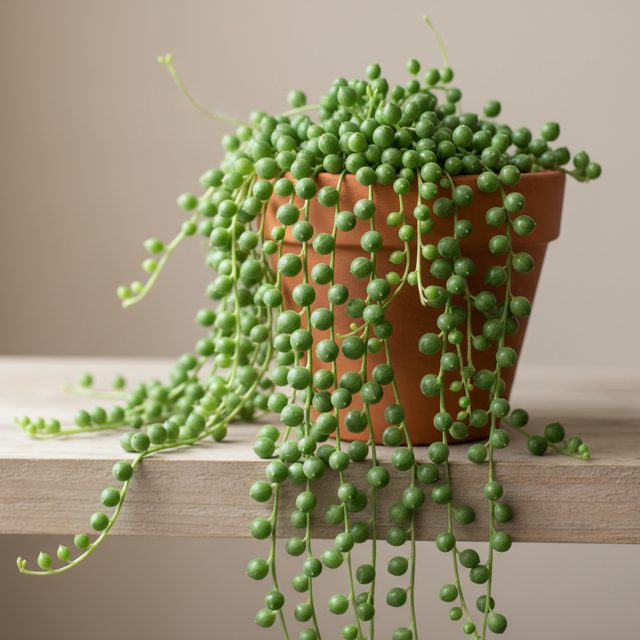
- Scientific name
- Senecio rowleyanus (Curio rowleyanus)
- Family
- Asteraceae
- Also known as
- String of Beads, Pearl Plant
- Category
- Houseplants
- Care difficulty
- Moderate
- Pet safety
- Toxic to pets
How to care for string of pearls
- Light: Requires bright, indirect light for at least 6 hours daily. Some direct morning sun is beneficial, but avoid harsh afternoon sun which can scorch the pearls.
- Water: Water sparingly; allow the soil to dry out completely between waterings, usually every 2-4 weeks. Overwatering is the most common cause of problems.
- Soil: Needs extremely well-draining soil, such as a cactus or succulent mix. Good aeration is vital to prevent root rot.
- Temperature: Thrives in average room temperatures between 68-78°F (20-26°C). Protect from temperatures below 50°F (10°C) and cold drafts.
- Humidity: Tolerates average to low household humidity. It is a succulent and does not require high humidity.
- Fertilizer: Feed lightly with a diluted succulent fertilizer once or twice during the spring and summer growing season. Avoid fertilizing in fall and winter.
- Propagation: Easily propagated from stem cuttings. Lay cuttings directly on top of moist soil or gently insert them into the soil, ensuring some nodes make contact.
Is string of pearls toxic to pets?
Not pet-safe. Mildly toxic to cats and dogs, potentially causing oral irritation, drooling, vomiting, or diarrhea if ingested. See our guide to toxic plants for cats and dogs.
Common problems
- Wrinkled or shriveled pearls: Indicates underwatering or that the plant is stressed from lack of moisture. Give it a thorough soak and check again in a few days.
- Mushy, yellowing, or browning pearls and rotting stems: This is a sign of overwatering and root rot. Reduce watering frequency dramatically and ensure the soil is drying out completely between waterings; repot if necessary.
Did you know?
The 'pearls' are actually specialized leaves designed to store water and minimize surface area, helping the plant survive in arid environments.
Let PlantBetter help
Snap a photo with PlantBetter to confirm your plant is a string of pearls, spot problems early and get care reminders tailored to your home.