- Scientific name
- Platycerium bifurcatum
- Family
- Polypodiaceae
- Also known as
- Elkhorn Fern, Stag's Horn Fern
- Category
- Houseplants
- Care difficulty
- Moderate
- Pet safety
- Non-toxic to cats and dogs
How to care for staghorn fern
- Light: Prefers bright, indirect light; too much direct sun can burn the fronds. Tolerates medium light but may grow slower.
- Water: Water thoroughly when the top layer of the mounting medium or soil feels dry. Submerge mounted ferns in water for 10-20 minutes, or water potted ones until saturated.
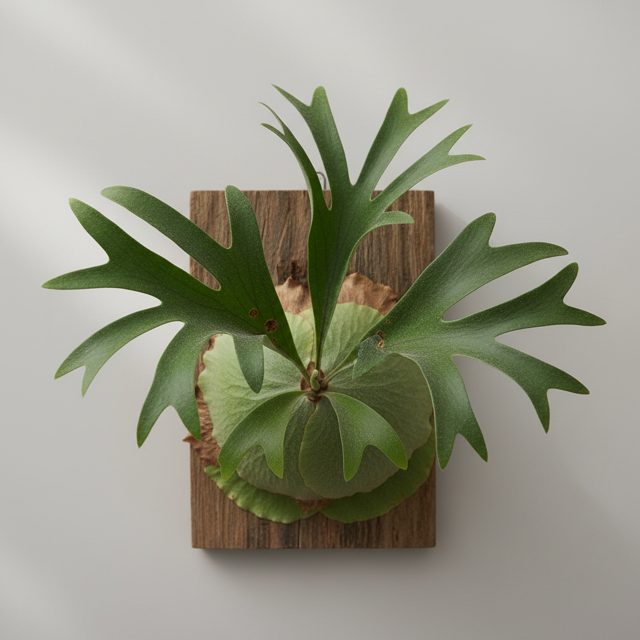
- Soil: If potted, use a very well-draining, airy mix, such as an orchid or fern mix. Mounted ferns grow on a plaque with sphagnum moss and other organic material.
- Temperature: Thrives in warm temperatures between 60-80°F (16-27°C). Protect from cold drafts and temperatures below 50°F (10°C).
- Humidity: Requires high humidity, ideally 60% or higher. Regular misting, a humidifier, or growing in a humid environment is essential.
- Fertilizer: Feed sparingly during the growing season (spring and summer) with a diluted liquid fertilizer. You can also tuck banana peels or slow-release pellets under the basal fronds.
- Propagation: Propagated by removing 'pups' or offsets that form around the base of the parent plant. Gently detach pups with some basal frond tissue and mount them.
Is staghorn fern toxic to pets?
Pet-safe. Non-toxic to cats and dogs. See our guide to toxic plants for cats and dogs.
Common problems
- Brown, crispy fronds: Indicates insufficient watering or low humidity. Increase watering frequency and improve surrounding humidity.
- Soft, black areas on fronds: Often a sign of overwatering or poor air circulation, leading to fungal issues. Allow to dry more and ensure good airflow.
Did you know?
The 'shield' fronds, which turn brown over time, protect the root ball and absorb moisture and nutrients from the environment.
Let PlantBetter help
Snap a photo with PlantBetter to confirm your plant is a staghorn fern, spot problems early and get care reminders tailored to your home.