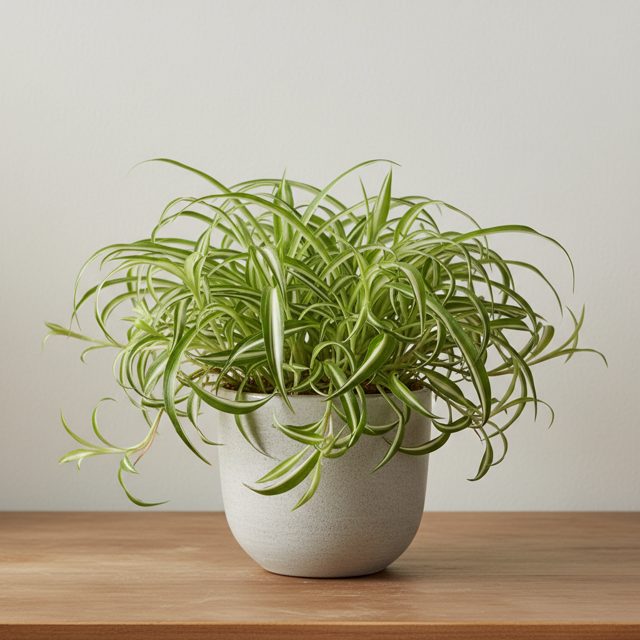
- Scientific name
- Chlorophytum comosum
- Family
- Asparagaceae
- Also known as
- Airplane Plant, Ribbon Plant
- Category
- Houseplants
- Care difficulty
- Easy
- Pet safety
- Non-toxic to cats and dogs
How to care for spider plant
- Light: Prefers bright to medium indirect light. Too much direct sun can scorch leaves, while too little light can reduce variegation.
- Water: Water thoroughly when the top inch of soil feels dry. Allow the soil to dry out slightly between waterings to prevent root rot.
- Soil: Requires a well-draining, all-purpose potting mix. Ensure good drainage to prevent soggy soil.
- Temperature: Thrives in average room temperatures, between 65-80°F (18-27°C). Protect from cold drafts.
- Humidity: Tolerates average household humidity but appreciates higher levels. Occasional misting can be beneficial.
- Fertilizer: Feed with a balanced liquid fertilizer every 2-4 weeks during spring and summer. Reduce or stop fertilizing in fall and winter.
- Propagation: Extremely easy to propagate from the 'spiderettes' (plantlets) that grow on long stems. Simply snip them off and place in water or moist soil.
Is spider plant toxic to pets?
Pet-safe. Spider Plants are considered non-toxic to cats, dogs, and humans, making them a safe choice for homes with pets and children. See our guide to toxic plants for cats and dogs.
Common problems
- Brown leaf tips: Often caused by fluoride in tap water, low humidity, or under/overwatering; use filtered water and ensure consistent moisture.
- Pale, dull leaves: Can indicate too much direct sun or insufficient light; adjust placement to bright, indirect light.
Did you know?
Spider Plants are believed to be mildly hallucinogenic to cats due to compounds similar to opium, leading to playful behavior if chewed.
Let PlantBetter help
Snap a photo with PlantBetter to confirm your plant is a spider plant, spot problems early and get care reminders tailored to your home.