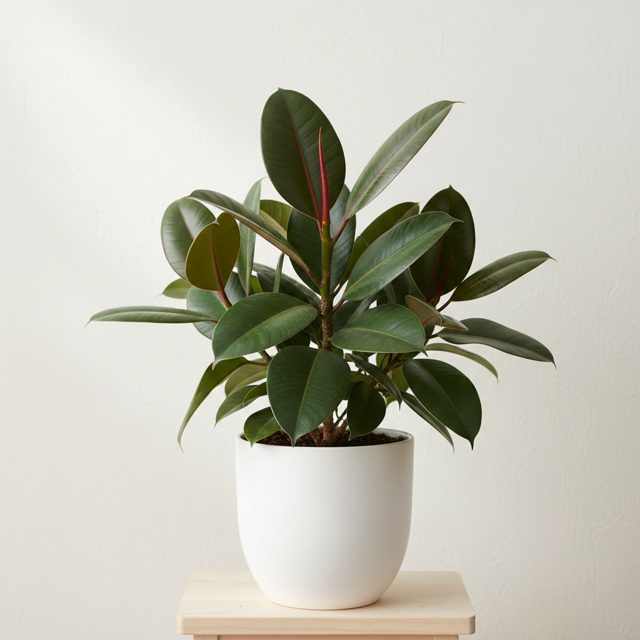
- Scientific name
- Ficus elastica
- Family
- Moraceae
- Also known as
- Rubber Tree, Indian Rubber Bush
- Category
- Houseplants
- Care difficulty
- Moderate
- Pet safety
- Toxic to pets
How to care for rubber plant
- Light: Needs bright, indirect light. Direct sun can scorch leaves, especially variegated varieties, while low light leads to leggy growth and leaf drop.
- Water: Water thoroughly when the top 1-2 inches of soil are dry. Allow the soil to dry out between waterings, but don't let it become bone dry.
- Soil: Requires a well-draining, rich potting mix. A standard houseplant mix amended with perlite and peat moss works well.
- Temperature: Prefers average to warm temperatures, between 60-75°F (16-24°C). Avoid sudden temperature changes and cold drafts.
- Humidity: Enjoys high humidity. Mist regularly, use a pebble tray, or place near a humidifier, especially in dry environments.
- Fertilizer: Feed with a balanced liquid fertilizer every 2-4 weeks during spring and summer. Reduce or stop feeding in fall and winter.
- Propagation: Can be propagated by stem cuttings or air layering, though it can be a slow process. Cuttings should be taken from mature stems and rooted in water or moist soil.
Is rubber plant toxic to pets?
Not pet-safe. Rubber Plants are toxic to cats, dogs, and humans. The milky sap contains insoluble calcium oxalates which can cause oral irritation, stomach upset, and skin irritation. See our guide to toxic plants for cats and dogs.
Common problems
- Drooping/yellowing leaves: Often a sign of overwatering; reduce frequency and ensure good drainage.
- Crispy brown leaves/edges: Usually due to underwatering or low humidity; water more consistently and increase ambient humidity.
Did you know?
The 'rubber' in its name comes from the latex sap found in the plant, which was historically used to make rubber.
Let PlantBetter help
Snap a photo with PlantBetter to confirm your plant is a rubber plant, spot problems early and get care reminders tailored to your home.