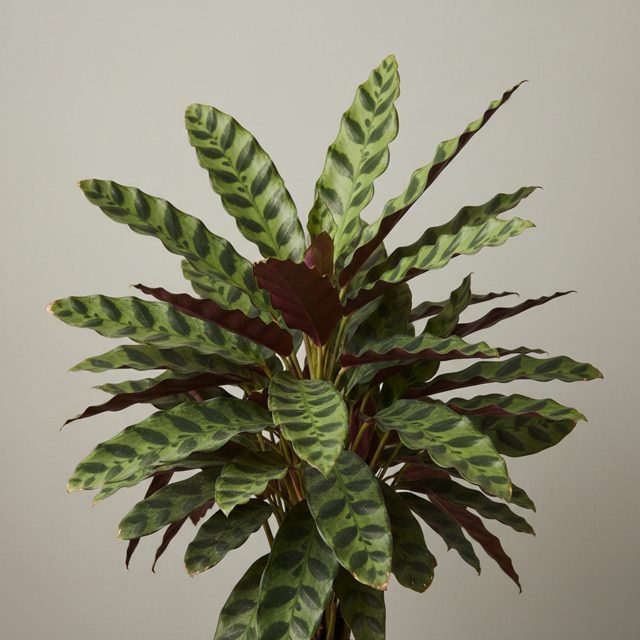
- Scientific name
- Goeppertia insignis (formerly Calathea lancifolia)
- Family
- Marantaceae
- Also known as
- Calathea Rattlesnake, Prayer Plant
- Category
- Houseplants
- Care difficulty
- Moderate
- Pet safety
- Non-toxic to cats and dogs
How to care for rattlesnake plant
- Light: Requires medium to bright, indirect light; direct sun will scorch and fade its leaves. Low light can reduce leaf color.
- Water: Keep the soil consistently moist but never soggy; allow the top inch of soil to dry out slightly before rewatering. Use distilled or filtered water to avoid mineral buildup.
- Soil: Use a well-draining, moisture-retentive potting mix, such as an African violet mix or regular potting soil amended with perlite and peat moss.
- Temperature: Thrives in warm, consistent temperatures between 65-80°F (18-27°C). Protect from cold drafts and sudden temperature drops.
- Humidity: Demands high humidity, ideally above 60%. Mist frequently, use a humidifier, or place on a pebble tray to prevent crispy leaf edges.
- Fertilizer: Feed with a balanced liquid fertilizer diluted to half strength every 2-4 weeks during the growing season (spring and summer). Do not fertilize in fall and winter.
- Propagation: Best propagated by division during repotting when the plant has multiple growth points. Gently separate rhizomes with roots attached.
Is rattlesnake plant toxic to pets?
Pet-safe. Non-toxic to cats, dogs, and humans, making it a safe and beautiful addition to any home with pets. See our guide to toxic plants for cats and dogs.
Common problems
- Brown, crispy leaf edges or tips: Most commonly caused by low humidity, tap water with high mineral content, or inconsistent watering. Increase humidity and use distilled water.
- Fading leaf color: Indicates too much direct light. Move the plant to a shadier spot with bright, indirect light.
Did you know?
The 'rattlesnake' pattern on its leaves isn't just for show; the undersides of the leaves are a deep purple, which is revealed when the leaves fold up at night.
Let PlantBetter help
Snap a photo with PlantBetter to confirm your plant is a rattlesnake plant, spot problems early and get care reminders tailored to your home.