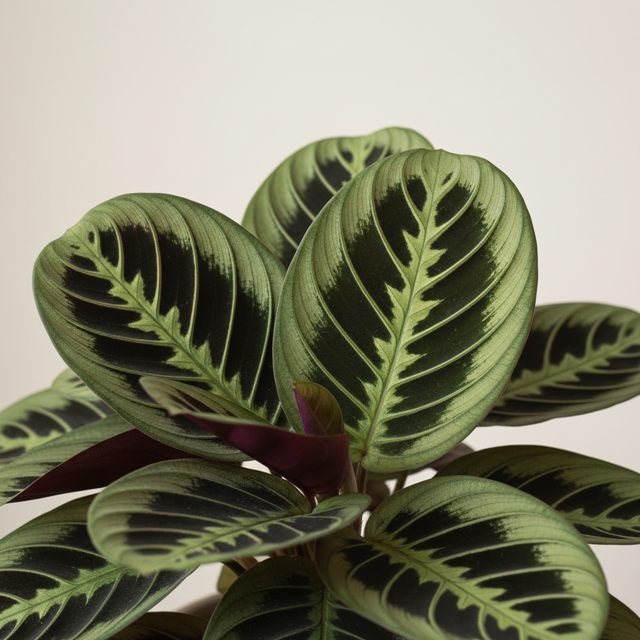
- Scientific name
- Maranta leuconeura
- Family
- Marantaceae
- Also known as
- Red-Vein Prayer Plant, Herringbone Plant
- Category
- Houseplants
- Care difficulty
- Moderate
- Pet safety
- Non-toxic to cats and dogs
How to care for prayer plant
- Light: Prefers bright, indirect light; direct sun will fade its leaf colors and scorch the foliage.
- Water: Keep the soil consistently moist but not waterlogged. Allow the top inch to dry out before watering, and use distilled or rainwater if possible.
- Soil: A well-draining, peat-based potting mix is ideal. Ensure good aeration to prevent root rot.
- Temperature: Thrives in warm temperatures between 65-80°F (18-27°C). Avoid sudden temperature fluctuations.
- Humidity: Requires high humidity, typically above 50%. Mist frequently, use a humidifier, or place it near a pebble tray.
- Fertilizer: Feed every two to four weeks during the growing season with a diluted liquid houseplant fertilizer. Do not fertilize in winter.
- Propagation: Propagate easily from stem cuttings taken below a node, placed in water or moist soil. Division during repotting is also an option.
Is prayer plant toxic to pets?
Pet-safe. Considered non-toxic to cats and dogs. See our guide to toxic plants for cats and dogs.
Common problems
- Crispy brown edges: Almost always a sign of low humidity or chemical sensitivity in water. Increase humidity and use filtered or distilled water.
- Fading leaf color: Indicates too much direct light. Move the plant to a location with brighter, but indirect, light.
Did you know?
Its common name comes from the way its leaves fold up at night, resembling hands clasped in prayer.
Let PlantBetter help
Snap a photo with PlantBetter to confirm your plant is a prayer plant, spot problems early and get care reminders tailored to your home.