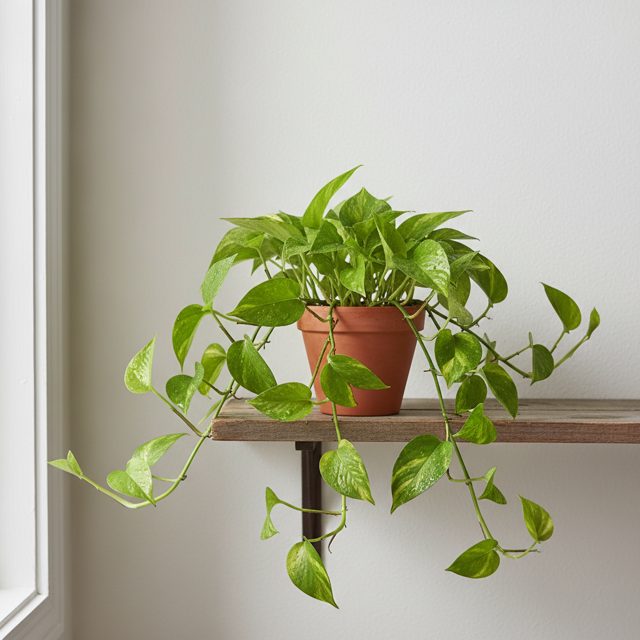
- Scientific name
- Epipremnum aureum
- Family
- Araceae
- Also known as
- Devil's Ivy, Money Plant
- Category
- Houseplants
- Care difficulty
- Easy
- Pet safety
- Toxic to pets
How to care for pothos
- Light: Thrives in medium to low indirect light. Direct sun can scorch leaves, while very low light can reduce variegation.
- Water: Water thoroughly when the top inch or two of soil feels dry. Allow soil to dry out between waterings to prevent root rot.
- Soil: Prefers well-draining potting mix. A standard indoor potting mix with some perlite works well.
- Temperature: Prefers average room temperatures, between 65-85°F (18-29°C). Avoid sudden temperature drops.
- Humidity: Tolerates average household humidity but appreciates higher humidity. Occasional misting or a pebble tray can be beneficial.
- Fertilizer: Feed with a balanced liquid fertilizer every 2-4 weeks during spring and summer. Reduce or stop fertilizing in fall and winter.
- Propagation: Easily propagated from stem cuttings in water or moist soil. Ensure each cutting has at least one node.
Is pothos toxic to pets?
Not pet-safe. Pothos is toxic to cats, dogs, and humans due to insoluble calcium oxalates, causing oral irritation, pain, and swelling. See our guide to toxic plants for cats and dogs.
Common problems
- Yellow leaves: Usually a sign of overwatering; reduce frequency and ensure good drainage.
- Drooping leaves: Often indicates underwatering; water thoroughly until water drains from the bottom.
Did you know?
Pothos is known for its air-purifying qualities, effectively removing toxins like formaldehyde and carbon monoxide from indoor environments.
Let PlantBetter help
Snap a photo with PlantBetter to confirm your plant is a pothos, spot problems early and get care reminders tailored to your home.