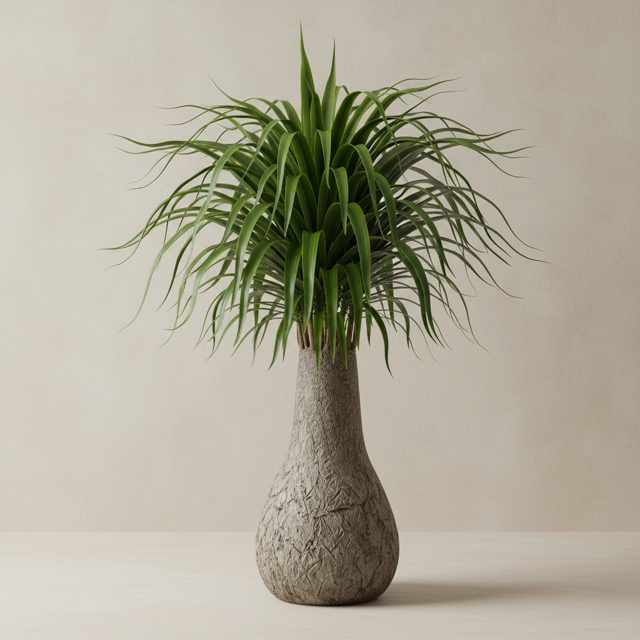
- Scientific name
- Beaucarnea recurvata
- Family
- Asparagaceae
- Also known as
- Elephant's Foot, Bottle Palm
- Category
- Houseplants
- Care difficulty
- Easy
- Pet safety
- Non-toxic to cats and dogs
How to care for ponytail palm
- Light: Prefers bright, indirect light but can tolerate medium light conditions. Direct sunlight is acceptable, especially if acclimated gradually.
- Water: Water thoroughly only when the soil is completely dry, typically every 2-4 weeks. The swollen trunk stores water, making it very drought-tolerant.
- Soil: Requires well-draining soil, such as a cactus or succulent mix. Good drainage is crucial to prevent root rot.
- Temperature: Thrives in average room temperatures between 65-80°F (18-27°C). Protect from cold drafts and temperatures below 50°F (10°C).
- Humidity: Tolerates average household humidity levels and does not require extra humidity. It's well-suited to dry indoor environments.
- Fertilizer: Feed sparingly with a balanced liquid fertilizer diluted to half strength during the spring and summer growing season. Fertilize once every 2-4 months.
- Propagation: Propagated mainly by offsets (pups) that grow at the base of the plant. Carefully remove and pot these pups in their own well-draining soil.
Is ponytail palm toxic to pets?
Pet-safe. Non-toxic to cats, dogs, and humans. See our guide to toxic plants for cats and dogs.
Common problems
- Yellowing or browning leaf tips: Often caused by under-watering or very low humidity. Ensure consistent watering when soil is dry and consider occasional misting if humidity is extremely low.
- Soft, mushy trunk or stem rot: This is a sign of severe overwatering. Allow the soil to dry out completely between waterings and improve drainage; repot if necessary to remove affected roots.
Did you know?
Despite its name, the Ponytail Palm is actually a succulent and not a true palm.
Let PlantBetter help
Snap a photo with PlantBetter to confirm your plant is a ponytail palm, spot problems early and get care reminders tailored to your home.