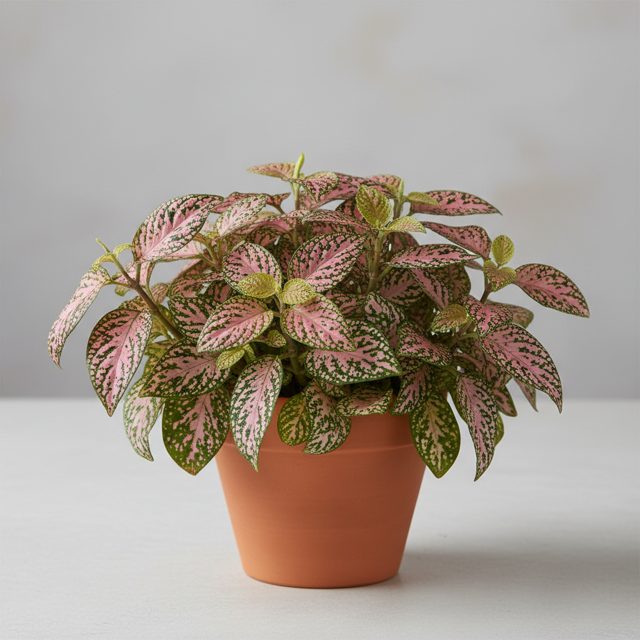
- Scientific name
- Hypoestes phyllostachya
- Family
- Acanthaceae
- Also known as
- Splash Plant, Freckle Face
- Category
- Houseplants
- Care difficulty
- Easy
- Pet safety
- Toxic to pets
How to care for polka dot plant
- Light: Prefers bright, indirect light for best color. Too much direct sun can scorch leaves, while too little light causes leggy growth and faded variegation.
- Water: Keep the soil consistently moist but not waterlogged. Water when the top inch of soil feels slightly dry, and don't let it dry out completely.
- Soil: Requires a well-draining, rich potting mix. A standard houseplant mix with added perlite or vermiculite for aeration is suitable.
- Temperature: Thrives in warm temperatures between 65-80°F (18-27°C). Protect it from cold drafts and temperatures below 60°F (16°C).
- Humidity: Enjoys moderate to high humidity. Regular misting or placing it on a pebble tray can be beneficial, especially in dry environments.
- Fertilizer: Feed with a balanced liquid fertilizer diluted to half strength every 2-4 weeks during the active growing season (spring and summer). Reduce feeding in fall and winter.
- Propagation: Easily propagated from stem cuttings. Cuttings root readily in water or moist potting mix, especially when humidity is high.
Is polka dot plant toxic to pets?
Not pet-safe. Mildly toxic to cats, dogs, and humans if ingested in large quantities, causing mild gastrointestinal upset. See our guide to toxic plants for cats and dogs.
Common problems
- Leggy growth/fading color: Insufficient light; move to a brighter, indirect light location. Pinch back stems to encourage bushiness and better color.
- Brown, crispy leaves: Often caused by too much direct sun or underwatering. Adjust light and ensure consistent moisture.
Did you know?
Regular pinching back of its stems encourages bushier growth and prevents it from becoming leggy.
Let PlantBetter help
Snap a photo with PlantBetter to confirm your plant is a polka dot plant, spot problems early and get care reminders tailored to your home.