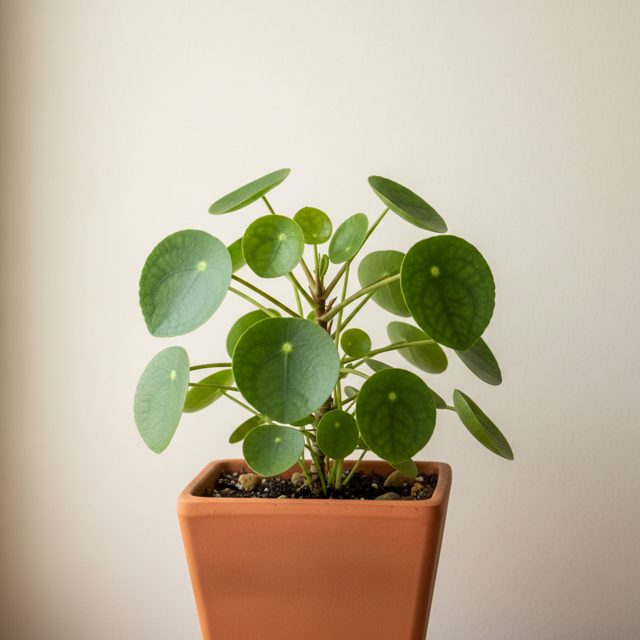
- Scientific name
- Pilea peperomioides
- Family
- Urticaceae
- Also known as
- Chinese Money Plant, Pancake Plant, UFO Plant
- Category
- Houseplants
- Care difficulty
- Easy
- Pet safety
- Non-toxic to cats and dogs
How to care for pilea peperomioides
- Light: Thrives in bright, indirect light. Direct sunlight can scorch its leaves, while too little light will cause leggy growth.
- Water: Water thoroughly when the top 1-2 inches of soil are dry. Allow excess water to drain completely to prevent root rot.
- Soil: Requires a well-draining potting mix. A standard houseplant mix amended with perlite or coarse sand for aeration is suitable.
- Temperature: Prefers average room temperatures between 65-75°F (18-24°C). Avoid cold drafts and temperatures below 50°F (10°C).
- Humidity: Tolerates average household humidity but appreciates moderate to high humidity. Occasional misting can be beneficial.
- Fertilizer: Feed with a balanced liquid fertilizer diluted to half strength monthly during the spring and summer. Reduce feeding in fall and winter.
- Propagation: Extremely easy to propagate from the 'pups' that grow at the base of the plant or from stem cuttings. Pups can be gently removed and potted directly.
Is pilea peperomioides toxic to pets?
Pet-safe. Non-toxic to cats, dogs, and humans. See our guide to toxic plants for cats and dogs.
Common problems
- Drooping leaves: Usually a sign of underwatering; check soil moisture and water if dry. Can also be due to overwatering if leaves are soft.
- Leaf curling/cupping: Often caused by too much direct light or uneven watering. Move to a shadier spot and ensure consistent moisture.
Did you know?
It's often called the 'pass-it-on plant' because it produces so many offsets that people frequently share them with friends.
Let PlantBetter help
Snap a photo with PlantBetter to confirm your plant is a pilea peperomioides, spot problems early and get care reminders tailored to your home.