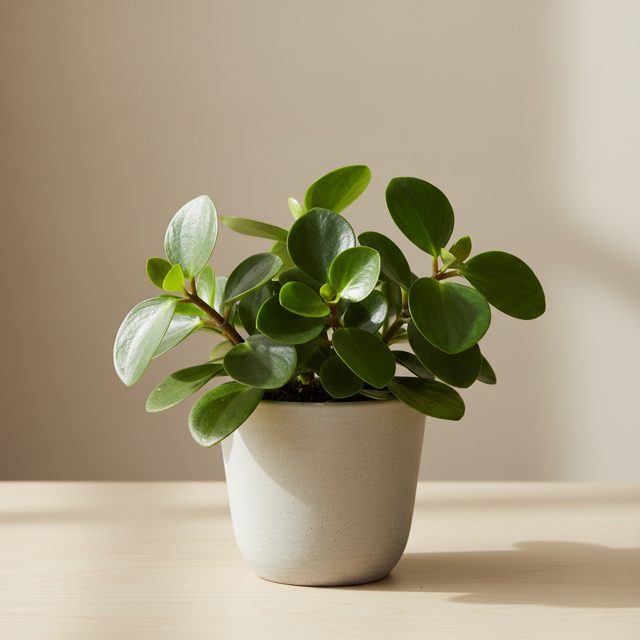
- Scientific name
- Peperomia obtusifolia
- Family
- Piperaceae
- Also known as
- Baby Rubber Plant, Pepper Face
- Category
- Houseplants
- Care difficulty
- Easy
- Pet safety
- Non-toxic to cats and dogs
How to care for peperomia obtusifolia
- Light: Prefers bright, indirect light. Can tolerate medium light, but growth may be slower and less vibrant.
- Water: Water thoroughly when the top 1-2 inches of soil feel dry. Allow soil to dry out slightly between waterings, as it's susceptible to root rot.
- Soil: Requires a well-draining, airy potting mix. A standard houseplant mix with added perlite or orchid bark works well.
- Temperature: Thrives in average room temperatures between 65-75°F (18-24°C). Avoid temperatures below 50°F (10°C).
- Humidity: Tolerates average household humidity. While it appreciates higher humidity, it typically doesn't require extra moisture.
- Fertilizer: Feed every 2-4 weeks during the growing season (spring/summer) with a balanced liquid fertilizer diluted to half strength. Reduce or stop in fall and winter.
- Propagation: Easily propagated from stem or leaf cuttings. Place cuttings in moist soil or water until roots develop.
Is peperomia obtusifolia toxic to pets?
Pet-safe. Non-toxic to cats, dogs, and humans. See our guide to toxic plants for cats and dogs.
Common problems
- Drooping or yellowing leaves: Can indicate either overwatering (mushy stems) or under-watering (dry, crispy leaves). Check soil moisture and adjust watering schedule accordingly.
- Lack of new growth or leggy stems: Usually due to insufficient light. Move the plant to a brighter location with indirect light.
Did you know?
Peperomias are often called 'radiator plants' because they enjoy the warmth of radiators and absorb indoor air pollutants.
Let PlantBetter help
Snap a photo with PlantBetter to confirm your plant is a peperomia obtusifolia, spot problems early and get care reminders tailored to your home.