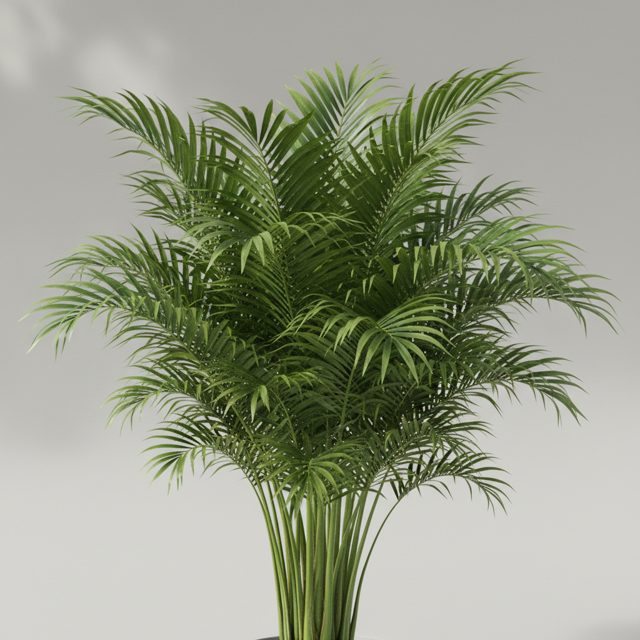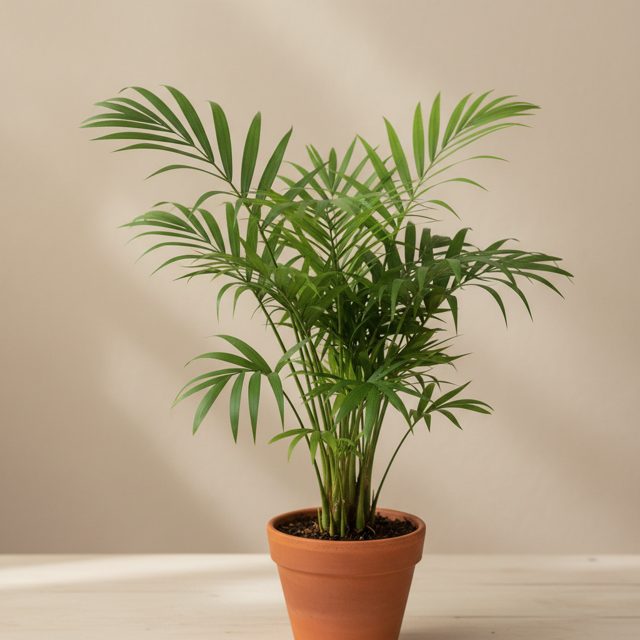
- Scientific name
- Chamaedorea elegans
- Family
- Arecaceae
- Also known as
- Neanthe Bella Palm, Colonial Palm
- Category
- Houseplants
- Care difficulty
- Easy
- Pet safety
- Non-toxic to cats and dogs
How to care for parlor palm
- Light: Thrives in low to medium indirect light; direct sunlight can scorch its delicate fronds.
- Water: Keep the soil consistently moist but never soggy. Allow the top inch of soil to dry out before watering again.
- Soil: Use a well-draining potting mix, preferably one formulated for palms or houseplants.
- Temperature: Prefers average room temperatures between 65-80°F (18-27°C). Protect it from cold drafts.
- Humidity: Enjoys moderate to high humidity; consider misting or using a pebble tray if your air is dry.
- Fertilizer: Feed with a balanced liquid fertilizer diluted to half strength once a month during the spring and summer. Reduce feeding in fall and winter.
- Propagation: Propagated by seeds, as it does not produce offshoots or readily divide. This is usually done by commercial growers.
Is parlor palm toxic to pets?
Pet-safe. Non-toxic to cats and dogs. See our guide to toxic plants for cats and dogs.
Common problems
- Brown leaf tips: Often due to low humidity, underwatering, or too much fluoride in tap water. Increase humidity and use filtered water if possible.
- Yellowing fronds: Can indicate overwatering or nutrient deficiency. Check soil moisture and ensure a proper fertilization schedule.
Did you know?
It was named 'Parlor Palm' because it was a popular plant for decorating parlors in Victorian times.
Let PlantBetter help
Snap a photo with PlantBetter to confirm your plant is a parlor palm, spot problems early and get care reminders tailored to your home.