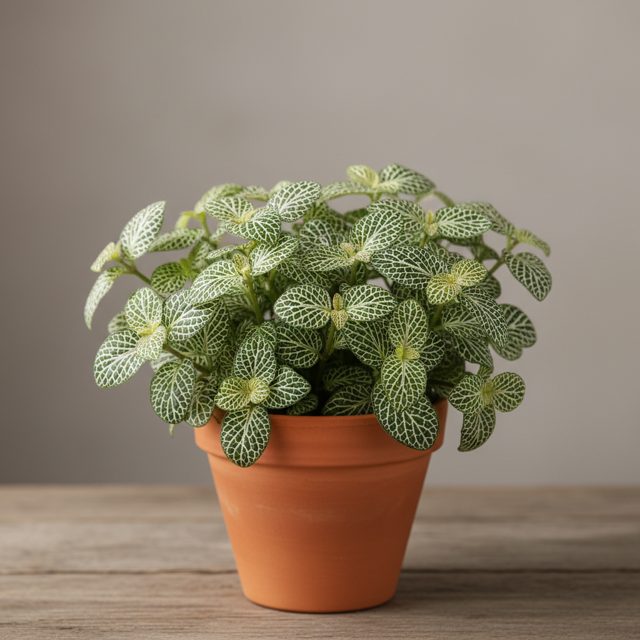
- Scientific name
- Fittonia albivenis
- Family
- Acanthaceae
- Also known as
- Mosaic Plant, Painted Net Leaf
- Category
- Houseplants
- Care difficulty
- Moderate
- Pet safety
- Non-toxic to cats and dogs
How to care for nerve plant
- Light: Prefers bright, indirect light; direct sunlight will scorch its delicate leaves. Too little light can cause its vibrant veining to fade.
- Water: Keep the soil consistently moist but not soggy. It is very sensitive to drying out and will dramatically wilt, but usually recovers quickly once watered.
- Soil: Requires a well-draining, moisture-retentive potting mix rich in organic matter. A peat-based mix is ideal.
- Temperature: Thrives in warm temperatures between 65-80°F (18-27°C). Protect it from cold drafts and temperatures below 60°F (16°C).
- Humidity: Absolutely requires high humidity, 60% or higher, to prevent crispy leaf edges. Regular misting, a pebble tray, or growing in a terrarium is essential.
- Fertilizer: Feed monthly during the growing season (spring and summer) with a balanced liquid fertilizer diluted to half strength. Reduce or stop feeding in fall and winter.
- Propagation: Easily propagated from stem cuttings. Cuttings root quickly in water or moist soil, especially with high humidity.
Is nerve plant toxic to pets?
Pet-safe. Non-toxic to cats, dogs, and humans. See our guide to toxic plants for cats and dogs.
Common problems
- Crispy, brown leaf edges: Almost always due to low humidity or underwatering. Increase humidity immediately and ensure consistent soil moisture.
- Leggy growth/fading color: Caused by insufficient light; move to a brighter, indirect light location. Pruning can also encourage bushier growth.
Did you know?
Its dramatic wilting when thirsty is a survival mechanism, conserving water until moisture becomes available again.
Let PlantBetter help
Snap a photo with PlantBetter to confirm your plant is a nerve plant, spot problems early and get care reminders tailored to your home.