- Scientific name
- Dracaena sanderiana
- Family
- Asparagaceae
- Also known as
- Ribbon Dracaena, Belgian Evergreen
- Category
- Houseplants
- Care difficulty
- Easy
- Pet safety
- Toxic to pets
How to care for lucky bamboo
- Light: Prefers bright, indirect light; direct sunlight can scorch its leaves. It can tolerate lower light but may not grow as vigorously.
- Water: If growing in water, change the water weekly to prevent stagnation and algae. If in soil, keep it consistently moist but not waterlogged.
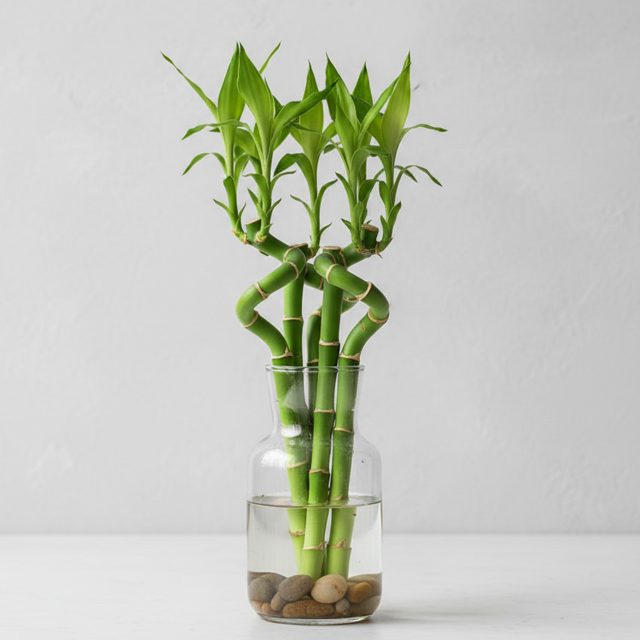
- Soil: If grown in soil, use a well-draining potting mix. Most commonly, it is grown in water with pebbles for support.
- Temperature: Thrives in warm temperatures between 65-90°F (18-32°C). Avoid cold drafts and temperatures below 50°F (10°C).
- Humidity: Enjoys moderate to high humidity. Regular misting can be beneficial, especially in dry environments.
- Fertilizer: If in water, a tiny drop of liquid houseplant fertilizer once every couple of months is sufficient. If in soil, feed a diluted liquid fertilizer every 2-3 months during the growing season.
- Propagation: Easily propagated by taking stem cuttings from the main stalk, ensuring they have at least one node, and rooting them in water.
Is lucky bamboo toxic to pets?
Not pet-safe. Toxic to cats and dogs, causing symptoms like vomiting, diarrhea, weakness, and incoordination due to saponins. See our guide to toxic plants for cats and dogs.
Common problems
- Yellowing stalks or leaves: Can be caused by too much direct sun, poor water quality (chlorine/fluoride), or over-fertilization. Use filtered water and adjust light.
- Brown tips on leaves: Often a sign of dry air or chemical buildup from tap water. Increase humidity and consider using distilled or filtered water.
Did you know?
Despite its name, Lucky Bamboo is not a bamboo species; it's a type of Dracaena from West Africa.
Let PlantBetter help
Snap a photo with PlantBetter to confirm your plant is a lucky bamboo, spot problems early and get care reminders tailored to your home.