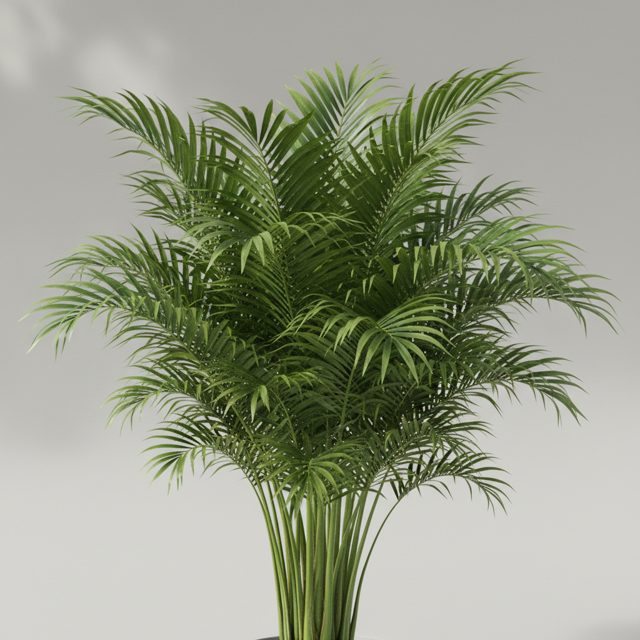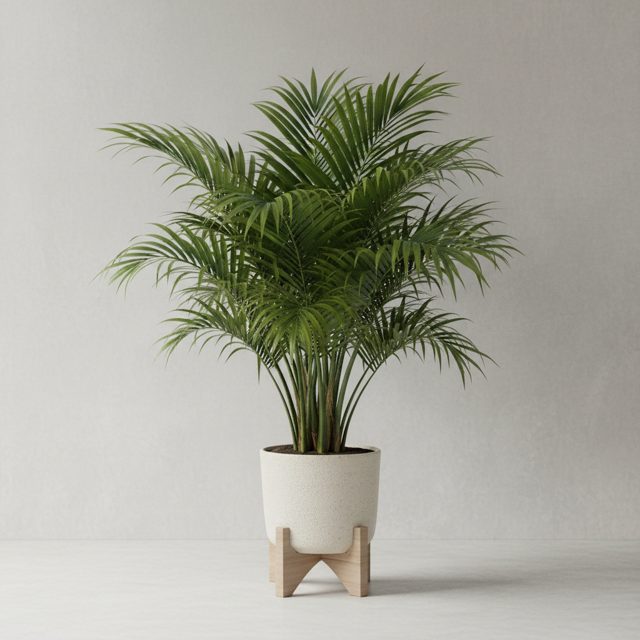
- Scientific name
- Howea forsteriana
- Family
- Arecaceae
- Also known as
- Thatch Palm, Paradise Palm
- Category
- Houseplants
- Care difficulty
- Easy
- Pet safety
- Non-toxic to cats and dogs
How to care for kentia palm
- Light: Tolerates low light but thrives in medium to bright indirect light. Avoid direct sun, which can scorch its leaves.
- Water: Water thoroughly when the top 1-2 inches of soil are dry. Allow excess water to drain to prevent root rot, as it is susceptible to overwatering.
- Soil: Requires a well-draining potting mix, ideally one formulated for palms or a general houseplant mix with added perlite.
- Temperature: Prefers average room temperatures between 65-80°F (18-27°C). Protect it from cold drafts and sudden temperature changes.
- Humidity: Tolerates average household humidity but appreciates moderate humidity. Occasional misting can be beneficial.
- Fertilizer: Feed with a balanced liquid fertilizer at half strength once every 1-2 months during the growing season. Fertilize sparingly.
- Propagation: Propagated by seeds, which can be slow and difficult for the home grower. Division is not typically effective for this palm.
Is kentia palm toxic to pets?
Pet-safe. Non-toxic to cats and dogs. See our guide to toxic plants for cats and dogs.
Common problems
- Brown leaf tips: Often caused by low humidity, underwatering, or excessive salts/fluoride in tap water. Increase humidity and use filtered water if possible.
- Yellowing fronds: Can be a sign of overwatering, nutrient deficiency, or root rot. Check soil moisture and ensure good drainage.
Did you know?
Kentia Palms were extremely popular in Victorian drawing rooms due to their elegance and ability to tolerate poor indoor conditions.
Let PlantBetter help
Snap a photo with PlantBetter to confirm your plant is a kentia palm, spot problems early and get care reminders tailored to your home.