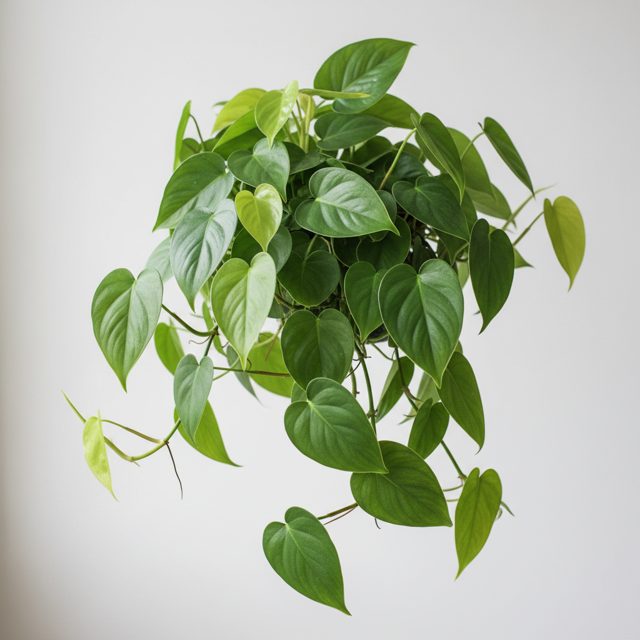
- Scientific name
- Philodendron hederaceum
- Family
- Araceae
- Also known as
- Sweetheart Plant, Parlor Ivy
- Category
- Houseplants
- Care difficulty
- Easy
- Pet safety
- Toxic to pets
How to care for heartleaf philodendron
- Light: Thrives in medium to low indirect light. Direct sunlight can scorch its leaves, while very low light can lead to sparse growth.
- Water: Water when the top 1-2 inches of soil feel dry. Allow the soil to dry out between waterings to prevent root rot.
- Soil: Prefers a well-draining, rich potting mix. A standard indoor potting mix with some perlite or orchid bark works well.
- Temperature: Prefers average room temperatures, between 65-80°F (18-27°C). Avoid cold drafts.
- Humidity: Tolerates average household humidity but appreciates higher levels. Occasional misting is beneficial.
- Fertilizer: Feed with a balanced liquid fertilizer every 2-4 weeks during spring and summer. Reduce or stop fertilizing in fall and winter.
- Propagation: Easily propagated from stem cuttings in water or moist soil. Ensure each cutting has at least one node and a few leaves.
Is heartleaf philodendron toxic to pets?
Not pet-safe. Heartleaf Philodendrons are toxic to cats, dogs, and humans due to insoluble calcium oxalates, causing oral irritation, pain, and swelling. See our guide to toxic plants for cats and dogs.
Common problems
- Yellow leaves: Commonly caused by overwatering; allow soil to dry more between waterings.
- Small, sparse leaves: Indicates insufficient light; move to a brighter, indirect light location.
Did you know?
This plant is often confused with Pothos due to its similar appearance, but its leaves are typically softer and more uniformly heart-shaped.
Let PlantBetter help
Snap a photo with PlantBetter to confirm your plant is a heartleaf philodendron, spot problems early and get care reminders tailored to your home.