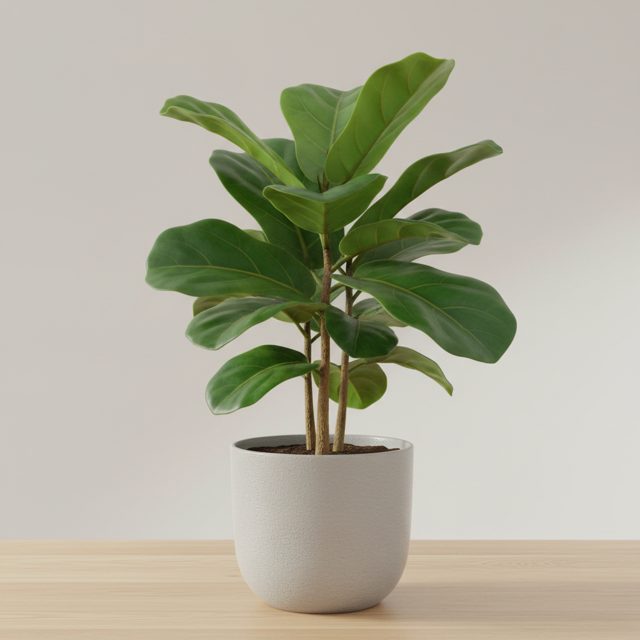
- Scientific name
- Ficus lyrata
- Family
- Moraceae
- Also known as
- Fiddle-leaf Fig Tree
- Category
- Houseplants
- Care difficulty
- Moderate
- Pet safety
- Toxic to pets
How to care for fiddle leaf fig
- Light: Needs bright, indirect light, ideally near a sunny window. Direct sun can scorch leaves, while low light can lead to leaf drop.
- Water: Water thoroughly when the top 2-3 inches of soil are dry. Allow excess water to drain completely and do not let the plant sit in standing water.
- Soil: Requires a well-draining potting mix, ideally one with good aeration and moisture retention. A mix for tropical plants or an aroid mix works well.
- Temperature: Prefers warm temperatures, between 65-75°F (18-24°C). Avoid cold drafts and sudden temperature fluctuations.
- Humidity: Thrives in high humidity. Regular misting, a humidifier, or a pebble tray can help prevent brown leaf edges.
- Fertilizer: Fertilize monthly during spring and summer with a balanced liquid houseplant fertilizer. Reduce or stop fertilizing in fall and winter.
- Propagation: Can be propagated through air layering or stem cuttings, though it can be challenging for home growers. Cuttings require high humidity and warmth to root.
Is fiddle leaf fig toxic to pets?
Not pet-safe. Fiddle Leaf Figs are toxic to cats and dogs, containing insoluble calcium oxalates that can cause oral irritation, burning, swelling, and gastrointestinal upset if ingested. See our guide to toxic plants for cats and dogs.
Common problems
- Brown spots/edges on leaves: Often caused by inconsistent watering, low humidity, or bacterial infection; ensure consistent watering and increase humidity.
- Leaf drop: Can be triggered by changes in environment, overwatering, or underwatering; review light, water, and temperature conditions.
Did you know?
Despite its name, the Fiddle Leaf Fig is not actually a fig tree that produces edible fruit.
Let PlantBetter help
Snap a photo with PlantBetter to confirm your plant is a fiddle leaf fig, spot problems early and get care reminders tailored to your home.