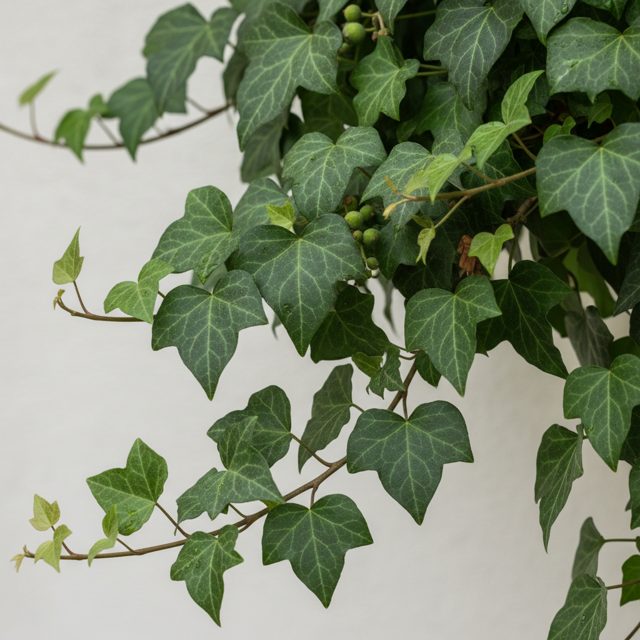
- Scientific name
- Hedera helix
- Family
- Araliaceae
- Also known as
- Common Ivy, Ivy
- Category
- Houseplants
- Care difficulty
- Easy
- Pet safety
- Toxic to pets
How to care for english ivy
- Light: Prefers bright, indirect light but can tolerate medium to low light. Avoid direct sunlight, which can scorch its leaves.
- Water: Water thoroughly when the top inch of soil feels dry. Allow the soil to dry out slightly between waterings, especially in cooler temperatures.
- Soil: Requires a well-draining, all-purpose potting mix. Good drainage is essential to prevent root rot.
- Temperature: Thrives in cool to average room temperatures, between 50-70°F (10-21°C). It prefers cooler temperatures than many houseplants.
- Humidity: Tolerates average household humidity but benefits from occasional misting, especially in dry indoor environments.
- Fertilizer: Feed with a balanced liquid fertilizer at half strength every 2-4 weeks during the growing season. Reduce or stop feeding in fall and winter.
- Propagation: Very easy to propagate from stem cuttings placed in water or moist potting mix. Cuttings root quickly.
Is english ivy toxic to pets?
Not pet-safe. Toxic to cats, dogs, and humans, causing gastrointestinal upset, skin irritation, and respiratory issues if ingested. See our guide to toxic plants for cats and dogs.
Common problems
- Spider mites: Common pest; rinse plant thoroughly with water and apply insecticidal soap or neem oil regularly until clear.
- Browning leaves: Can be caused by underwatering, low humidity, or too much direct sunlight. Check soil moisture and light conditions.
Did you know?
English Ivy is one of the top-performing plants identified by NASA for removing airborne toxins like formaldehyde and benzene.
Let PlantBetter help
Snap a photo with PlantBetter to confirm your plant is a english ivy, spot problems early and get care reminders tailored to your home.