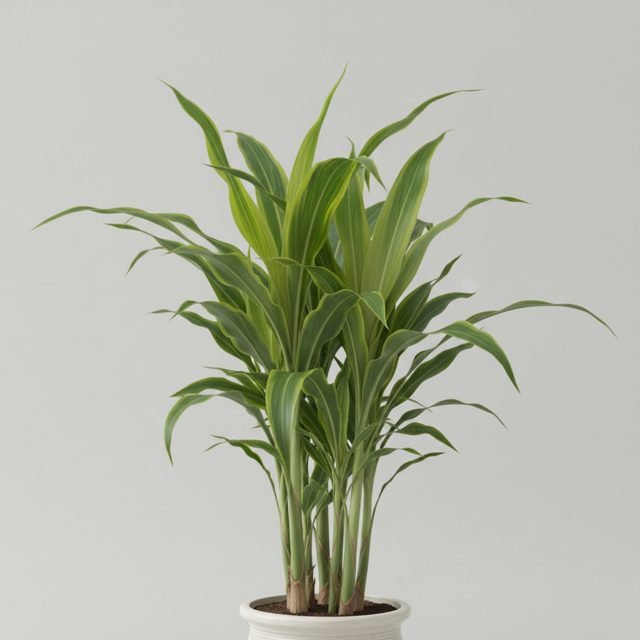
- Scientific name
- Dracaena fragrans 'Massangeana'
- Family
- Asparagaceae
- Also known as
- Mass Cane, Fragrant Dracaena
- Category
- Houseplants
- Care difficulty
- Easy
- Pet safety
- Toxic to pets
How to care for corn plant
- Light: Prefers bright, indirect light; direct sun can scorch its leaves. It can tolerate lower light, but variegation may fade and growth will slow.
- Water: Water thoroughly when the top 1-2 inches of soil feel dry. Allow the soil to dry out slightly between waterings to prevent root rot.
- Soil: Use a well-draining potting mix. A standard indoor plant mix amended with perlite or coarse sand for better drainage is ideal.
- Temperature: Thrives in average room temperatures between 65-75°F (18-24°C). Protect from cold drafts and temperatures below 60°F (16°C).
- Humidity: Tolerates average household humidity but appreciates higher humidity. Occasional misting can prevent leaf tip burn, especially in dry environments.
- Fertilizer: Feed with a balanced liquid fertilizer diluted to half strength every 2-4 weeks during spring and summer. Reduce or stop feeding in fall and winter.
- Propagation: Easily propagated by stem cuttings from the cane, rooted in water or moist potting mix. Top cuttings with leaves also root readily.
Is corn plant toxic to pets?
Not pet-safe. Toxic to cats and dogs, causing symptoms like vomiting (sometimes with blood), diarrhea, weakness, and dilated pupils due to saponins. See our guide to toxic plants for cats and dogs.
Common problems
- Brown leaf tips: Often caused by low humidity, fluoride or chlorine in tap water, or inconsistent watering. Use filtered water and increase humidity.
- Yellowing lower leaves: Can be a natural part of aging, but also indicates overwatering or nutrient deficiency. Check soil moisture and feeding schedule.
Did you know?
Its common name comes from the striking resemblance of its foliage to corn leaves, though it's not related to true corn.
Let PlantBetter help
Snap a photo with PlantBetter to confirm your plant is a corn plant, spot problems early and get care reminders tailored to your home.