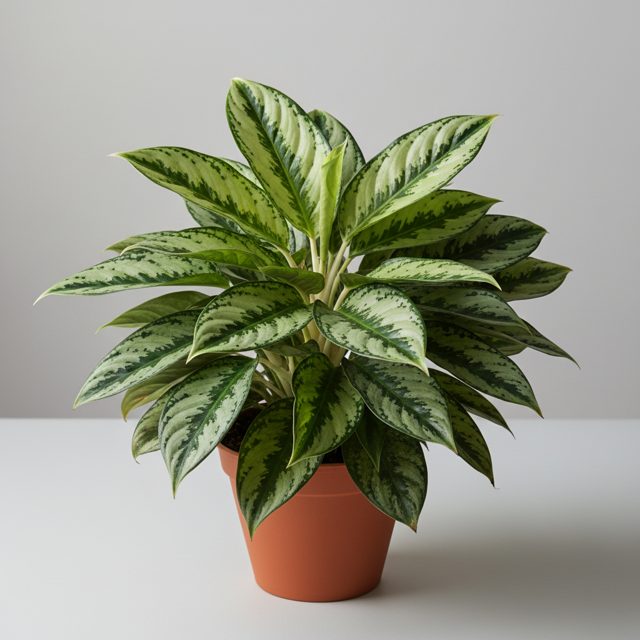
- Scientific name
- Aglaonema commutatum
- Family
- Araceae
- Also known as
- Aglaonema, Philippine Evergreen
- Category
- Houseplants
- Care difficulty
- Easy
- Pet safety
- Toxic to pets
How to care for chinese evergreen
- Light: Prefers low to medium indirect light; direct sunlight can scorch its leaves.
- Water: Water thoroughly when the top inch or two of soil feels dry. Allow excess water to drain to prevent root rot.
- Soil: Use a well-draining potting mix, ideally one formulated for houseplants.
- Temperature: Thrives in temperatures between 65-80°F (18-27°C). Avoid cold drafts and temperatures below 60°F (15°C).
- Humidity: Enjoys moderate to high humidity; misting or a pebble tray can be beneficial.
- Fertilizer: Feed with a balanced liquid fertilizer every 2-4 weeks during the growing season (spring and summer). Reduce or stop feeding in fall and winter.
- Propagation: Easily propagated by stem cuttings placed in water or moist soil. Division of the plant is also possible during repotting.
Is chinese evergreen toxic to pets?
Not pet-safe. Toxic to cats and dogs due to insoluble calcium oxalates, causing oral irritation, pain, and swelling. See our guide to toxic plants for cats and dogs.
Common problems
- Yellowing leaves: Often caused by overwatering or insufficient light. Adjust watering schedule and move to a brighter location.
- Brown leaf tips: Usually indicates low humidity or inconsistent watering. Increase humidity and maintain a consistent watering routine.
Did you know?
NASA listed Chinese Evergreens as one of the best plants for purifying indoor air.
Let PlantBetter help
Snap a photo with PlantBetter to confirm your plant is a chinese evergreen, spot problems early and get care reminders tailored to your home.