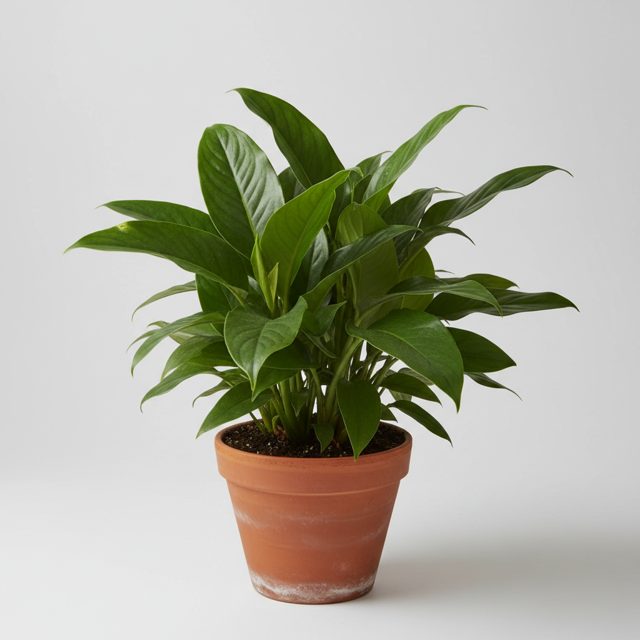
- Scientific name
- Aspidistra elatior
- Family
- Asparagaceae
- Also known as
- Bar Room Plant, Iron Plant
- Category
- Houseplants
- Care difficulty
- Easy
- Pet safety
- Non-toxic to cats and dogs
How to care for cast iron plant
- Light: Tolerates very low light, but thrives in medium to low indirect light. Avoid direct sunlight which can bleach its leaves.
- Water: Water sparingly, allowing the soil to dry out completely between waterings. Overwatering is the most common cause of problems.
- Soil: Requires a well-draining potting mix, ideally a standard houseplant mix amended with perlite.
- Temperature: Prefers average room temperatures, between 60-80°F (15-27°C). It can tolerate cooler temperatures down to 50°F (10°C).
- Humidity: Tolerates average household humidity levels and does not require extra humidity.
- Fertilizer: Fertilize infrequently, once or twice during the growing season with a diluted balanced liquid fertilizer. It needs very little feeding.
- Propagation: Propagate by division when repotting, ensuring each section has a few leaves and healthy roots.
Is cast iron plant toxic to pets?
Pet-safe. Considered non-toxic to cats and dogs. See our guide to toxic plants for cats and dogs.
Common problems
- Brown leaf tips: Can be caused by tap water chemicals (use filtered water) or underwatering. Ensure consistent, but not excessive, moisture.
- Yellowing leaves: Most often a sign of overwatering. Allow the soil to dry out more thoroughly between waterings.
Did you know?
Its resilience made it a popular plant in Victorian homes, often found in drafty hallways or gas-lit rooms where other plants struggled.
Let PlantBetter help
Snap a photo with PlantBetter to confirm your plant is a cast iron plant, spot problems early and get care reminders tailored to your home.