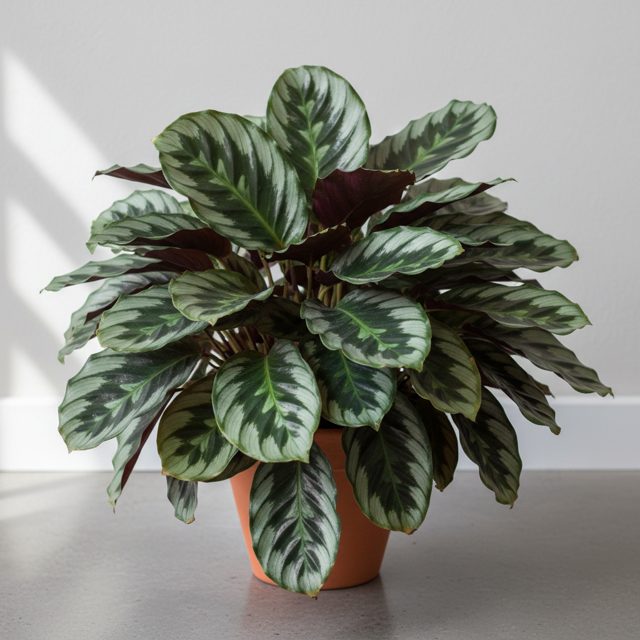
- Scientific name
- Calathea spp.
- Family
- Marantaceae
- Also known as
- Prayer Plant, Zebra Plant
- Category
- Houseplants
- Care difficulty
- Moderate
- Pet safety
- Non-toxic to cats and dogs
How to care for calathea
- Light: Requires medium to low indirect light. Direct sunlight will fade and scorch the leaves. Too little light can dull patterns.
- Water: Keep soil consistently moist but never soggy. Water when the top inch of soil is just starting to dry out, preferably with distilled or filtered water.
- Soil: Needs a well-draining, moisture-retentive potting mix. A mix of peat moss, perlite, and bark works well.
- Temperature: Prefers warm temperatures, between 65-80°F (18-27°C). Avoid temperatures below 60°F (15°C) and cold drafts.
- Humidity: Requires high humidity (above 60%) to thrive. Use a humidifier, pebble tray, or group with other plants.
- Fertilizer: Feed sparingly with a balanced liquid fertilizer diluted to half strength every 2-4 weeks during spring and summer. Avoid over-fertilizing.
- Propagation: Best propagated by division during repotting. Gently separate rhizomes into smaller clumps, ensuring each has roots and foliage.
Is calathea toxic to pets?
Pet-safe. Calathea plants are considered non-toxic to cats, dogs, and humans, making them a safe choice for homes with pets and children. See our guide to toxic plants for cats and dogs.
Common problems
- Brown, crispy leaf edges: Most often due to low humidity or use of tap water with chemicals; increase humidity and use distilled/filtered water.
- Curling leaves: Indicates underwatering or extremely low humidity; check soil moisture and increase humidity levels.
Did you know?
Calatheas are often called 'prayer plants' because their leaves fold upwards at night, resembling hands in prayer, and then unfurl again in the morning light.
Let PlantBetter help
Snap a photo with PlantBetter to confirm your plant is a calathea, spot problems early and get care reminders tailored to your home.