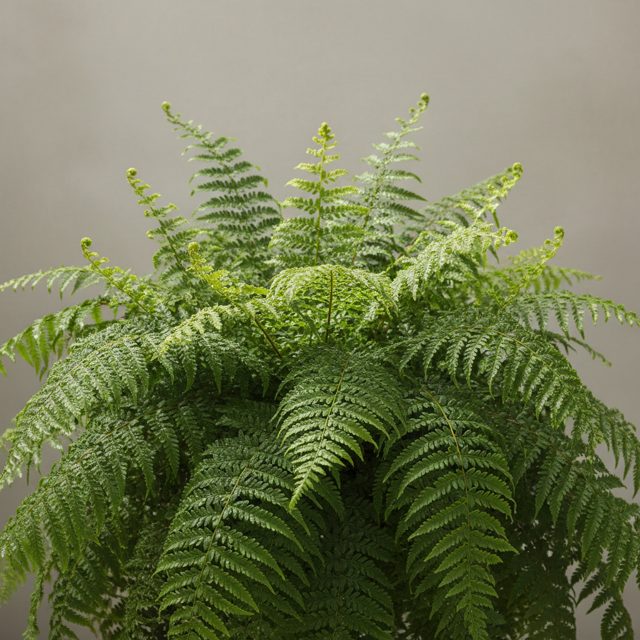
- Scientific name
- Nephrolepis exaltata 'Bostoniensis'
- Family
- Lomariopsidaceae
- Also known as
- Sword Fern, Boston Sword Fern
- Category
- Houseplants
- Care difficulty
- Moderate
- Pet safety
- Non-toxic to cats and dogs
How to care for boston fern
- Light: Prefers bright, indirect light; direct sunlight will scorch its delicate fronds. Low light can cause sparse growth.
- Water: Keep the soil consistently moist but not soggy. Do not allow the soil to dry out completely between waterings.
- Soil: Use a rich, well-draining, peat-based potting mix. Good drainage is crucial to prevent root rot.
- Temperature: Thrives in temperatures between 65-75°F (18-24°C). Avoid temperatures below 55°F (13°C) and cold drafts.
- Humidity: Requires high humidity, typically above 50%. Mist daily, use a humidifier, or place on a pebble tray.
- Fertilizer: Feed with a diluted liquid fertilizer (half strength) every 4-6 weeks during spring and summer. Fertilize sparingly or not at all in fall and winter.
- Propagation: Propagate by division of the root ball or by planting the small plantlets that form on its runners (stolons).
Is boston fern toxic to pets?
Pet-safe. Considered non-toxic to cats and dogs. See our guide to toxic plants for cats and dogs.
Common problems
- Dry, crispy fronds: Indicates insufficient humidity or underwatering. Increase humidity levels and maintain consistent soil moisture.
- Yellowing fronds/leaf drop: Can be caused by insufficient light, underwatering, or excessive direct sunlight. Adjust light and watering accordingly.
Did you know?
It was first discovered in a shipment of common sword ferns to Boston in 1894, hence its name.
Let PlantBetter help
Snap a photo with PlantBetter to confirm your plant is a boston fern, spot problems early and get care reminders tailored to your home.