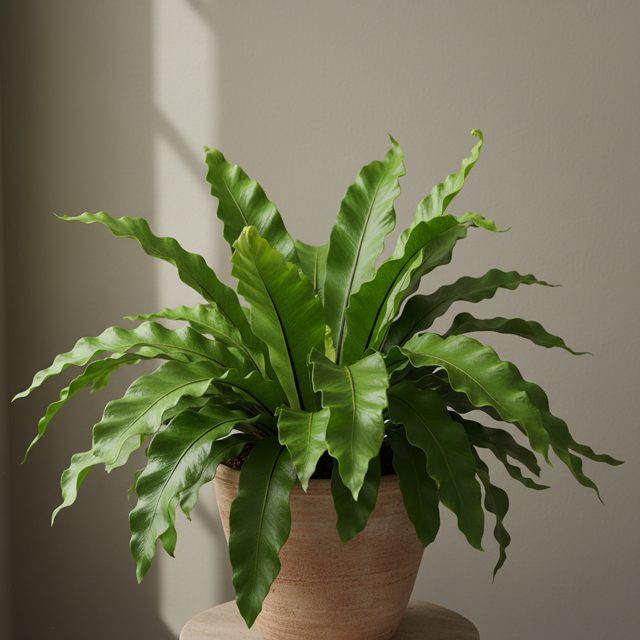
- Scientific name
- Asplenium nidus
- Family
- Aspleniaceae
- Also known as
- Nest Fern
- Category
- Houseplants
- Care difficulty
- Moderate
- Pet safety
- Non-toxic to cats and dogs
How to care for bird's nest fern
- Light: Prefers medium to bright indirect light; direct sunlight will scorch its leaves. Tolerates lower light but growth may be slower.
- Water: Keep the soil consistently moist but not soggy, allowing the top inch to dry slightly between waterings. Avoid watering directly into the 'nest' as this can cause rot.
- Soil: Thrives in a well-draining, loose, and aerated potting mix. An orchid mix or a blend of peat, perlite, and bark is ideal.
- Temperature: Prefers warm temperatures between 65-80°F (18-27°C). Protect it from cold drafts and temperatures below 55°F (13°C).
- Humidity: Enjoys high humidity, so regular misting, a humidifier, or a pebble tray is beneficial. It can tolerate average household humidity if consistently watered.
- Fertilizer: Fertilize sparingly during the growing season (spring and summer) with a diluted liquid fertilizer. Over-fertilization can burn the fronds.
- Propagation: Typically propagated from spores collected from the underside of mature fronds, which is a challenging process. Division is not common for this fern type.
Is bird's nest fern toxic to pets?
Pet-safe. Non-toxic to cats and dogs. See our guide to toxic plants for cats and dogs.
Common problems
- Brown leaf tips/edges: Often caused by low humidity, underwatering, or too much direct light. Increase humidity and ensure consistent moisture.
- Yellowing fronds: Can indicate overwatering leading to root rot, or occasionally a nutrient deficiency. Check soil moisture and adjust watering.
Did you know?
In its natural habitat, it grows as an epiphyte, often nestled in tree branches, using them for support rather than as a parasite.
Let PlantBetter help
Snap a photo with PlantBetter to confirm your plant is a bird's nest fern, spot problems early and get care reminders tailored to your home.