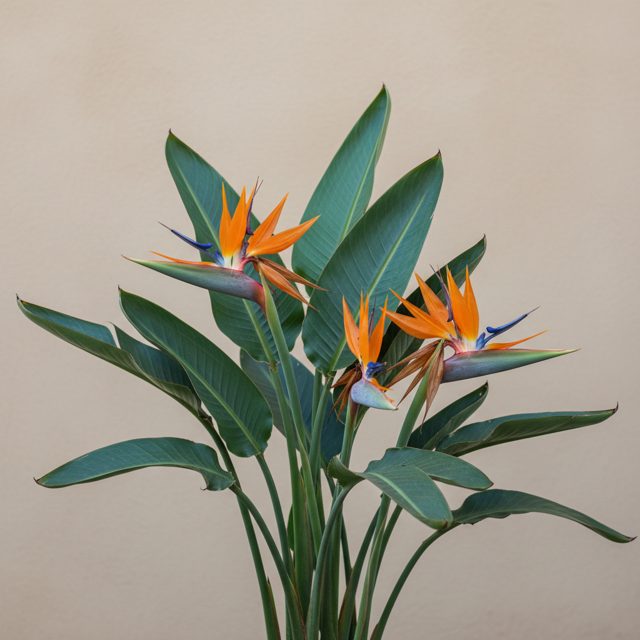
- Scientific name
- Strelitzia reginae
- Family
- Strelitziaceae
- Also known as
- Crane Flower, Orange Bird of Paradise
- Category
- Houseplants
- Care difficulty
- Moderate
- Pet safety
- Toxic to pets
How to care for bird of paradise
- Light: Requires bright, direct sunlight for several hours a day to encourage blooming. Will tolerate bright indirect light, but may not flower.
- Water: Keep the soil consistently moist during the growing season, allowing the top inch to dry slightly between waterings. Reduce watering in winter.
- Soil: Use a rich, well-draining potting mix. A blend for palms or a regular potting mix amended with perlite works well.
- Temperature: Thrives in warm temperatures between 65-80°F (18-27°C). Protect from temperatures below 50°F (10°C).
- Humidity: Appreciates moderate to high humidity; misting or a pebble tray can be beneficial, especially in dry climates.
- Fertilizer: Feed with a balanced liquid fertilizer every 2-4 weeks during the spring and summer. Reduce to monthly in fall and stop in winter.
- Propagation: Propagate by division of rhizomes during repotting or by planting fresh seeds, though germination can be slow and sporadic.
Is bird of paradise toxic to pets?
Not pet-safe. Toxic to cats, dogs, and humans, causing mild gastrointestinal upset due to hydrocyanic acid. See our guide to toxic plants for cats and dogs.
Common problems
- No blooms: Most often due to insufficient light, lack of maturity (takes 3-5 years to bloom), or inconsistent care. Provide ample bright, direct light.
- Brown, crispy leaf edges: Can be caused by low humidity, underwatering, or too much direct, harsh sunlight. Increase humidity and check watering schedule.
Did you know?
Its distinctive flower resembles a crane's head and beak, which is how it earned its common name.
Let PlantBetter help
Snap a photo with PlantBetter to confirm your plant is a bird of paradise, spot problems early and get care reminders tailored to your home.